

Beware of Fake Interior Designers — A Real Problem in 2025

Interior Fraud Awareness: Beware of Fake Interior Designers

In today’s fast-growing interior market, many homeowners fall victim to fake or unprofessional interior designers who promise beautiful designs at low prices — but disappear after taking advance payments or deliver poor-quality work.

This awareness aims to educate customers so they can identify and avoid such frauds before it’s too late.

 Common Fraud Tactics

  1. Fake Portfolios:
    They show photos of completed projects that are not theirs — often copied from the internet or other designers.

  2. Advance Payment Scams:
    They demand a large advance (50–80%) and then either disappear or stop work halfway.

  3. No Legal Agreement:
    They avoid signing proper contracts to escape responsibility later.

  4. Low Price Traps:
    They attract clients with very low quotations that are impossible to deliver with quality materials.

  5. Fake Company Identity:
    They use made-up company names, fake GST numbers, or false visiting cards to look professional.

  6. Poor-Quality Materials:
    They promise branded materials but use cheap substitutes once the work starts.


 How to Protect Yourself

  1. Verify Credentials:
    Check the designer’s company registration, GST number, and previous client references.

  2. Ask for a Written Agreement:
    Always sign a detailed contract that mentions cost, materials, timeline, and warranty.

  3. Visit Completed Sites:
    Personally visit one or two completed projects before finalizing.

  4. Make Stage-Wise Payments:
    Never pay the full amount in advance — release payments only after each work stage is completed.

  5. Check Reviews & Social Media:
    Genuine designers usually have active profiles, testimonials, and consistent client feedback.

  6. Trust Reputed Studios:
    Work only with verified and experienced interior design studios or companies.

Why the Market Is So Competitive

  1. Rising Number of Designers:
    Every year, more new designers and studios enter the market, making it harder for genuine professionals to stand out.

  2. Price Wars:
    Many designers quote extremely low prices to attract clients, often compromising on material quality or finishing.

  3. Client Confusion:
    With so many options, clients get confused between price, quality, and trust — often choosing the cheapest, not the best.

  4. Social Media Pressure:
    Designers compete to look “perfect” online, sometimes spending more on marketing than on actual project quality.

  5. Lack of Standardization:
    There’s no fixed pricing structure or quality check, leading to unfair competition and unrealistic client expectations.


 Challenges Designers Face

  1. Balancing Quality and Cost:
    Clients want premium designs at minimum cost, forcing designers to make tough compromises.

  2. Maintaining Reputation:
    One bad project or delay can harm a studio’s image in a highly competitive field.

  3. Payment Delays:
    Many clients delay payments, creating cash flow problems for designers.

  4. Innovation Pressure:
    Every project needs to look “unique,” pushing designers to constantly reinvent their ideas.

  5. Copycat Designs:
    Unethical designers copy others’ concepts and offer them cheaper, reducing originality value in the market.


 How to Win in a Tough Market

  1. Build Trust, Not Just Quotes:
    Clients value honesty and communication more than flashy promises.

  2. Show Real Work:
    Focus on completed projects and client satisfaction — real proof beats fake marketing.

  3. Quality Over Quantity:
    Delivering fewer but better projects builds long-term success.

  4. Professional Contracts:
    Always use legal agreements to avoid misunderstandings or fraud.

  5. Stay Updated:
    Keep learning about new materials, technologies, and design trends.

Common Materials Where Frauds Occur

  1. Plywood & MDF Boards:
    Duplicate plywood with fake ISI stamps or brand stickers are sold at cheaper rates.
    They warp or break easily within months.

  2. Electrical Wires & Switches:
    Fake wires without proper copper content can overheat and cause fire hazards.

  3. Paints & Polish:
    Counterfeit paint brands look similar but fade quickly and give patchy finishes.

  4. Hardware & Hinges:
    Imitation branded hinges or channels lose strength and rust fast.

  5. Acoustic & Insulation Materials:
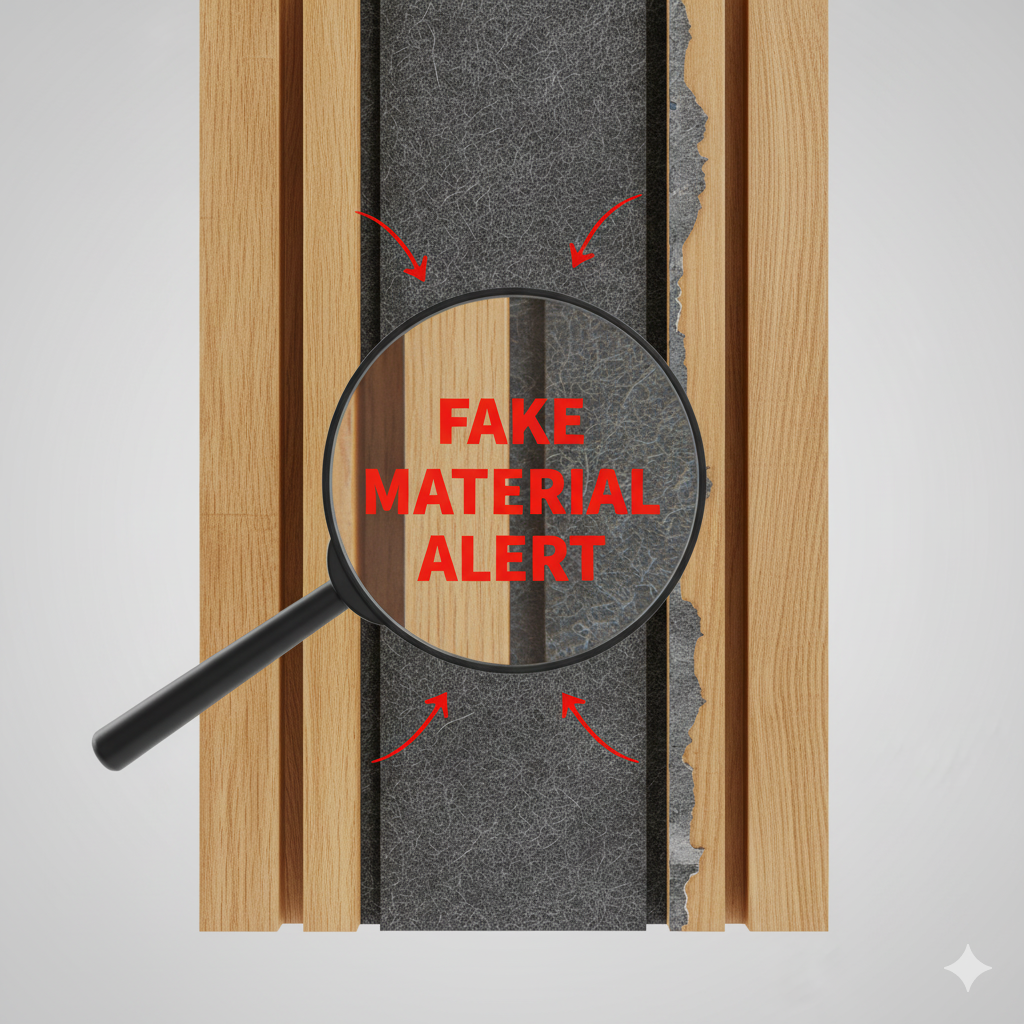
    Duplicate acoustic sheets, fiber panels, or MLV rolls do not provide actual soundproofing, even if packed like originals.

  6. Lighting Products:
    Fake LED panels or drivers consume more power and have a very short lifespan.

How Fraud Happens

  • Suppliers replace branded cartons with local material inside.

  • Old packaging is reused to sell duplicate products.

  • Contractor claims “same quality” as branded but provides cheap copies.

  • No purchase bill or serial number is provided to verify authenticity.


 How to Identify Genuine vs Duplicate

  1. Check Brand Hologram or QR Code:
    Most genuine brands now provide QR codes for verification.

  2. Ask for Purchase Bills:
    Always demand an official bill with GST number and product details.

  3. Inspect Packaging & Labels:
    Look for spelling mistakes, faded printing, or unusual colors on packaging.

  4. Verify with Manufacturer:
    Contact the brand’s customer care to confirm batch number or dealer name.

  5. Compare Weight and Texture:
    Fake materials often feel lighter, thinner, or different in finish.

  6. Buy Only from Authorized Dealers:
    Never buy “loose” material without brand packing or documentation.

Common Cash Fraud Situations

  1. Fake Contractor Scam:
    Someone claims to be an interior professional, shows fake designs or references, takes a big advance, and disappears.

  2. Material Supply Fraud:
    Supplier takes advance for ordering materials, but never delivers or sends duplicate items.

  3. Half Work, Full Payment:
    Contractor starts work, takes more money after a few days, and then stops work midway.

  4. No Receipts or Proof:
    Cash is taken without a proper bill, making it impossible to trace or take legal action later.

  5. Hidden Extra Charges:
    Fraudsters ask for “urgent” or “extra” advance for material booking that never happens.


 Why People Fall for It

  • Attractive low pricing or discounts.

  • Emotional or friendly talk to build quick trust.

  • Promises of “fast work” if payment is made immediately.

  • Lack of written contracts or formal process.


 How to Protect Yourself

  1. Never Pay Full Advance:
    Always split payments in stage-wise installments — after each phase of work.

  2. Use Digital Payments:
    Avoid cash. Use UPI, bank transfer, or cheque so that every payment has a record.

  3. Always Get a Receipt:
    Every payment, big or small, must have a signed receipt or invoice.

  4. Sign a Proper Agreement:
    Clearly mention payment terms, scope of work, and deadlines in writing.

  5. Verify Identity:
    Check the person’s company registration, ID proof, or GST number before paying.

  6. Don’t Rush:
    Scammers often pressure you to pay “today itself.” Take your time to verify before you trust.


🚫 Warning Signs of Fraud

  • Asking for more than 40–50% advance.

  • Avoiding written agreement.

  • Refusing to share company details.

  • Giving excuses after taking payment.

  • Suddenly changing phone numbers or office location

Differences Between Honest and Fraudulent Companies

FeatureHonest CompanyFraudulent Company
Work QualityUses proper materials, skilled labor, finishes work professionally.Uses cheap or duplicate materials, cuts corners, poor finishing.
TransparencyProvides detailed quotes, invoices, and project updates.Vague costing, hidden charges, avoids documentation.
Client InteractionCommunicates regularly, respects timelines.Disappears, delays work, makes excuses.
Materials UsedGenuine branded products with warranty.Fake or low-quality substitutes, often no warranty.
Contracts & LegalitiesSigns clear agreements with payment milestones.Avoids formal contracts; asks for full advance.
ReputationPositive reviews, past client references.Fake testimonials, copied portfolios.

🧩 Why Quality Speaks

  1. Long-term Trust:
    Quality work builds a lasting relationship between designer and client.

  2. Value for Money:
    Genuine companies deliver the promised results, making every rupee worth it.

  3. Safety & Durability:
    Proper materials and workmanship ensure structural safety and longevity.

  4. Peace of Mind:
    No constant worry about fraud, shortcuts, or fake promises.


Warning Signs of Fraud Companies

  • Overly cheap quotations that seem “too good to be true.”

  • Avoiding written contracts or invoices.

  • Using unclear or fake portfolios.

  • Pressuring for full cash advance.

  • Frequent changes in contact or office locations.


Tips to Choose Honest Companies

  1. Verify credentials, GST, and company registration.

  2. Ask for previous client references and visit completed projects.

  3. Use stage-wise payments linked to completed milestones.

  4. Check material authenticity through bills and brand codes.

  5. Read online reviews and feedback from reliable sources.

The interior design and construction industry is full of opportunities — but also risks for unsuspecting clients. Many homeowners fall victim to fraudulent designers, fake contractors, or duplicate materials because they trust too quickly without verification.

This campaign emphasizes the importance of careful evaluation, verification, and vigilance before hiring anyone.


 Common Risks for Clients

  1. Advance Payment Frauds:
    Paying large sums upfront to contractors who never deliver.

  2. Fake Material Use:
    Contractors claim to use branded products but install duplicates.

  3. Low-Cost Traps:
    Extremely cheap quotes often compromise quality and lead to extra hidden charges.

  4. Fake Portfolios:
    Some designers show copied work to impress clients but cannot deliver the same quality.

  5. Unregistered or Unverified Companies:
    Lack of legal credentials or GST registration can leave clients with no legal recourse.


 Tips for Safe Client Decisions

  1. Verify Credentials:
    Check company registration, GST number, and past project references.

  2. Request Written Contracts:
    Include work scope, material specifications, payment schedule, and timelines.

  3. Stage-Wise Payments:
    Never pay full amount upfront — pay only after verified completion of work stages.

  4. Inspect Materials:
    Confirm branded materials via bills, serial numbers, or QR verification.

  5. Visit Previous Projects:
    See real work done by the designer to evaluate quality.

  6. Check Reviews & Feedback:
    Online reviews, social media, and word-of-mouth can reveal credibility.


🏠 Message

“Trust is earned, not given. Think twice before you hire. Your dream home deserves honesty, transparency, and quality.”

In today’s digital age, many interior design and construction clients find services online. While the internet makes hiring convenient, it also exposes clients to fake advertisements and fraudulent offers. Scammers lure clients with unrealistically low prices or flashy deals, only to cheat them later.

This awareness topic helps clients identify fake ads and avoid online scams.


 Common Tactics in Fake Online Ads

  1. Unrealistically Low Prices:
    Ads offering 50–70% discounts or “too good to be true” quotes.

  2. Fake Company Profiles:
    Scammers create professional-looking websites or social media accounts with fake testimonials.

  3. Copied Portfolio Images:
    Ads show impressive designs stolen from other websites or designers.

  4. Advance Payment Requests:
    Fraudsters demand full payment upfront before starting any work.

  5. No Contact Verification:
    Ads may not provide verifiable office addresses, phone numbers, or GST registration.


💡 How to Protect Yourself

  1. Check the Company Credentials:
    Verify company registration, GST number, and past project references.

  2. Visit Real Projects:
    Don’t rely on images in ads — visit completed projects if possible.

  3. Stage-Wise Payments:
    Avoid paying full advance; pay only after verified completion of work milestones.

  4. Verify Contact Information:
    Ensure phone numbers, emails, and physical addresses are legitimate.

  5. Be Skeptical of “Too Cheap” Offers:
    Compare quotes with market rates; extremely low prices often indicate poor-quality work or scams.

  6. Check Reviews and Social Media:
    Search for genuine client reviews on Google, Facebook, or verified platforms.


🚨 Warning Signs

  • Ads promising “luxury interiors at half the market rate.”

  • No verified client testimonials or references.

  • Requesting full payment immediately.

  • Offers that create urgency (“limited time only”).


✅ Message

“Cheap offers online can cost you dearly. Verify, inspect, and pay smartly.
Trust only verified designers — your home deserves honesty, not shortcuts.”
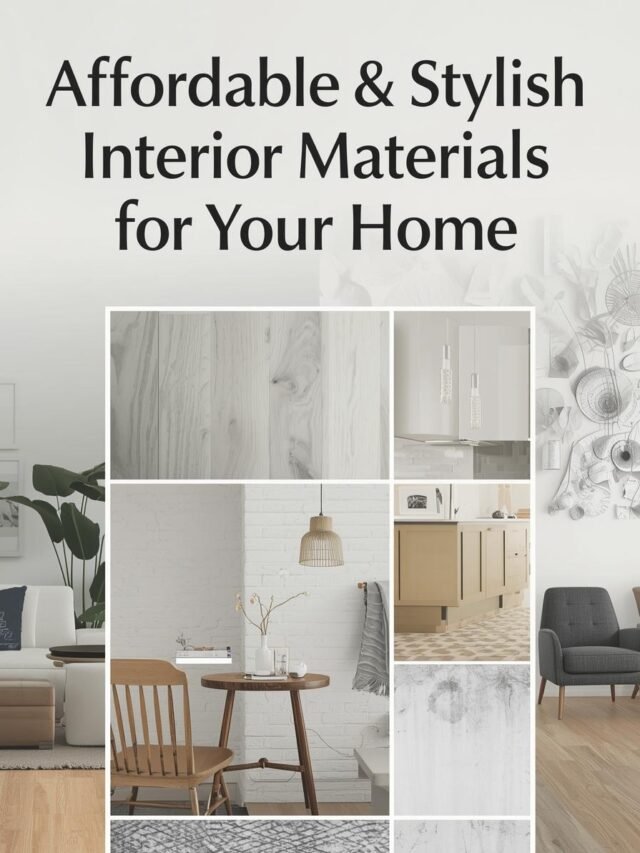
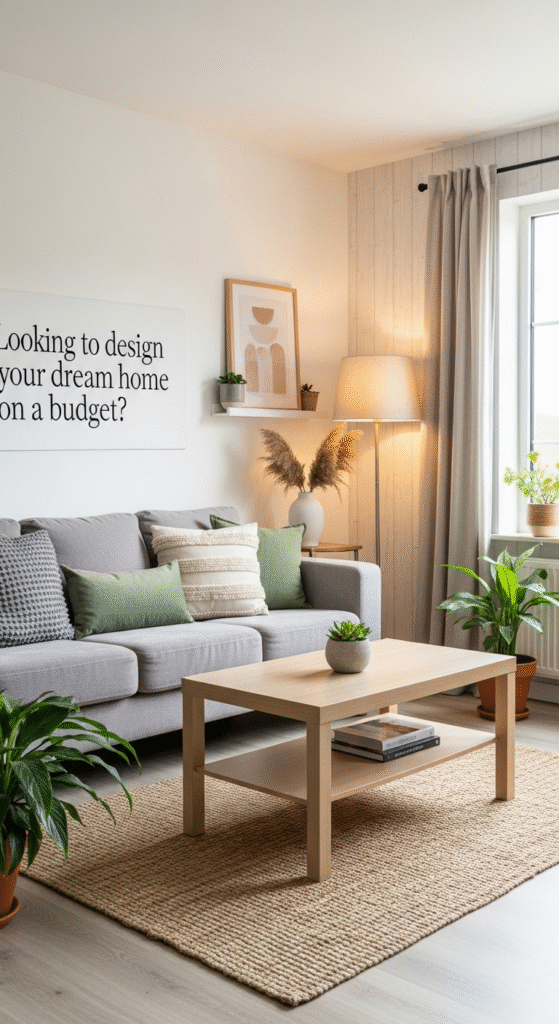
10 Affordable Interior Materials for Home That Always Look Stylish

Affordable & Stylish Interior Materials for Your Home_add this text in the photo_

Designing your dream home doesn’t have to be expensive. Many people think that only costly materials can make interiors look premium, but that’s not true. With smart choices, you can achieve a modern, elegant, and durable interior look at a budget-friendly price.

In this article, we will explore 10 affordable interior materials that are cost-effective, stylish, and long-lasting. These materials are widely available, easy to maintain, and suitable for different spaces like bedrooms, living rooms, kitchens, and offices.

Google_AI_Studio_2025-09-18T12_47_39.558Z

Plywood – Strong and Reliable Choice

Plywood has always been a favorite in interior design. It is affordable, durable, and versatile, making it ideal for:

  • Furniture (beds, tables, wardrobes)

  • Partitions

  • Kitchen cabinets

Unlike solid wood, plywood is less expensive but still strong enough to last for years. With a polished or laminate finish, plywood furniture looks elegant and stylish in any home.

Google_AI_Studio_2025-09-18T12_49_44.029Z

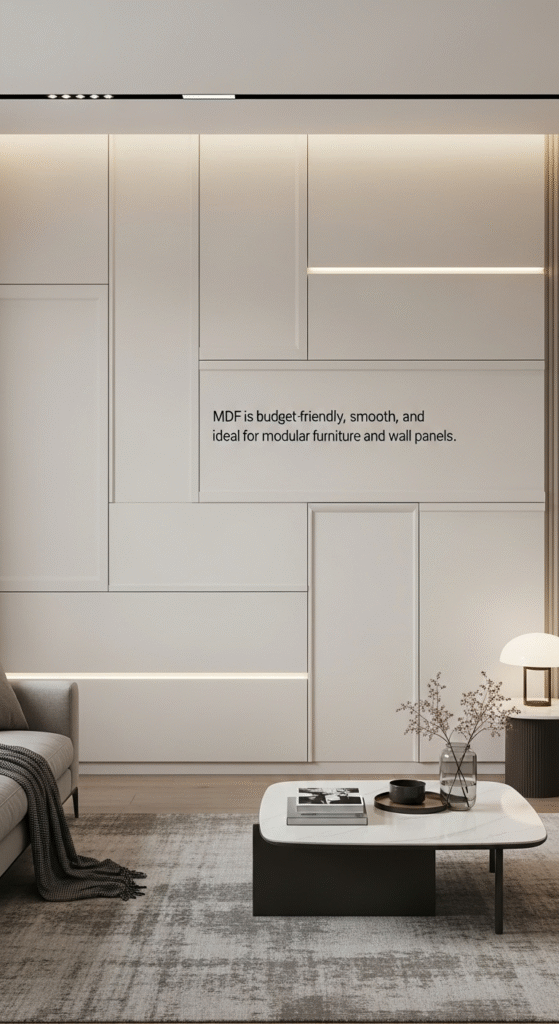
MDF (Medium Density Fiberboard) – Smooth & Stylish

If you want a modern finish at low cost, MDF is a perfect choice. It is widely used in modular furniture and decorative wall panels. MDF is smooth, easy to paint, and can be molded into different designs.

Uses include:

  • Wall panels with paint or wallpaper finish

  • Modular furniture (TV units, shelves, wardrobes)

  • Decorative partitions

MDF works best in dry areas because it is not water-resistant, but it delivers a premium look at a budget price.

Google_AI_Studio_2025-09-18T12_50_16.021Z

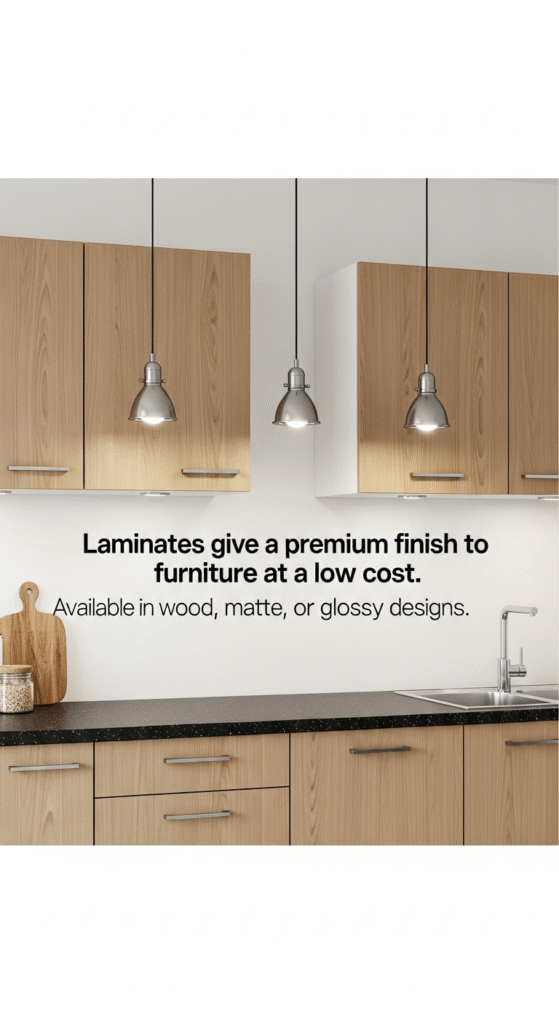
Laminate Sheets – Premium Finish at Low Cost

Laminates are a budget-friendly alternative to veneer and polish. They come in various textures and finishes like wood, matte, glossy, and stone effect. Laminates are scratch-resistant, easy to clean, and highly durable.

Perfect for:

  • Kitchen cabinets

  • Wardrobes

  • Tabletops

  • Wall coverings

They instantly give furniture a premium modern look without overspending.

Google_AI_Studio_2025-09-18T12_52_06.885Z

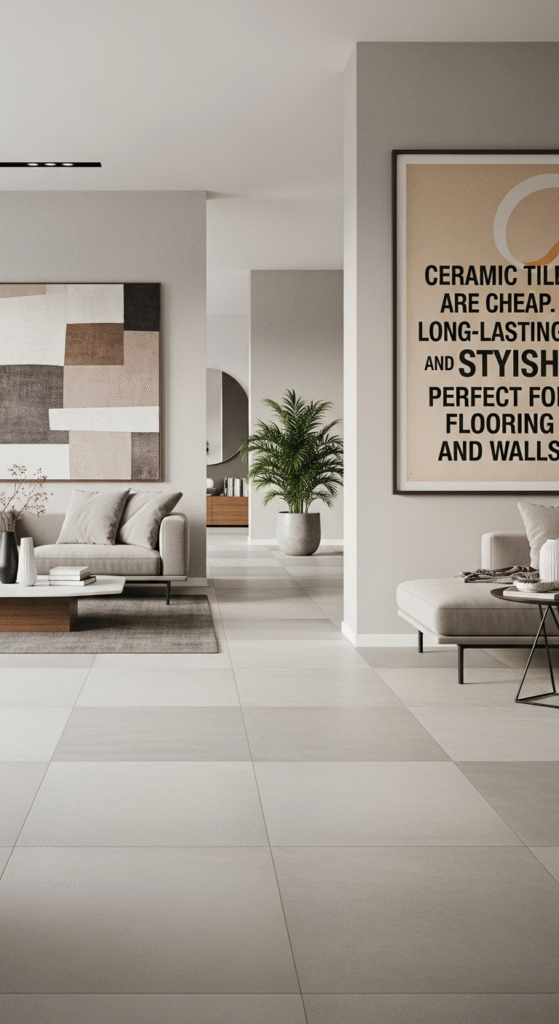
Ceramic Tiles – Affordable Flooring & Walls

Ceramic tiles are one of the most affordable and long-lasting materials for flooring and walls. Available in countless designs and sizes, they can make any room look stylish.

Best uses:

  • Living room and bedroom floors

  • Kitchen backsplashes

  • Bathroom walls and flooring

Ceramic tiles are easy to maintain, water-resistant, and available at a fraction of the cost of marble or granite.

Google_AI_Studio_2025-09-18T12_53_19.914Z

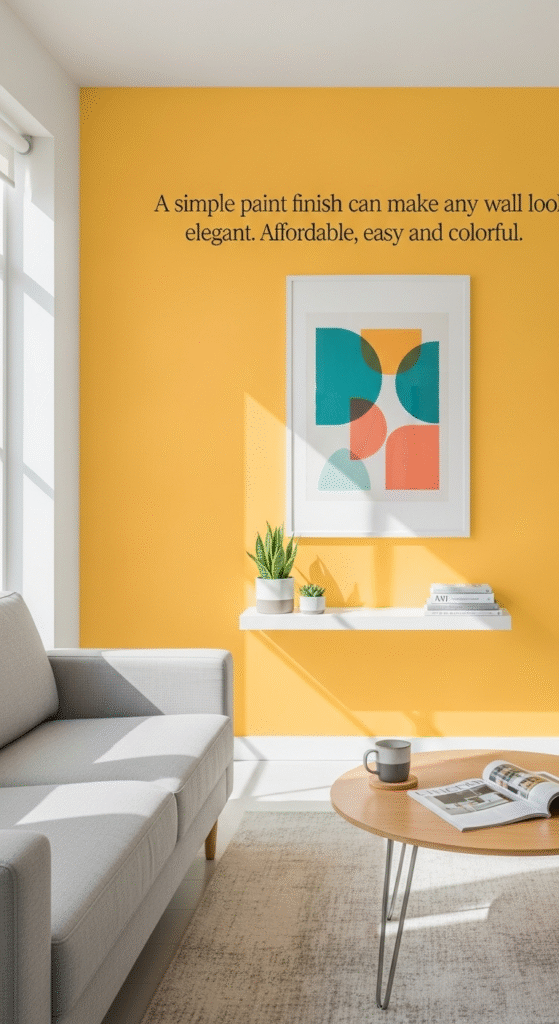
Paint & Wall Putty – Simple Yet Elegant

A fresh coat of paint can completely transform your home interiors. Combined with wall putty for smoothness, paint is one of the cheapest ways to make walls beautiful.

Benefits:

  • Wide variety of colors and finishes (matte, glossy, satin)

  • Easy to apply and maintain

  • Gives a clean and fresh look

By choosing the right colors, you can create moods—light shades for openness, bold colors for energy, and pastels for calmness.

Google_AI_Studio_2025-09-18T12_53_51.437Z

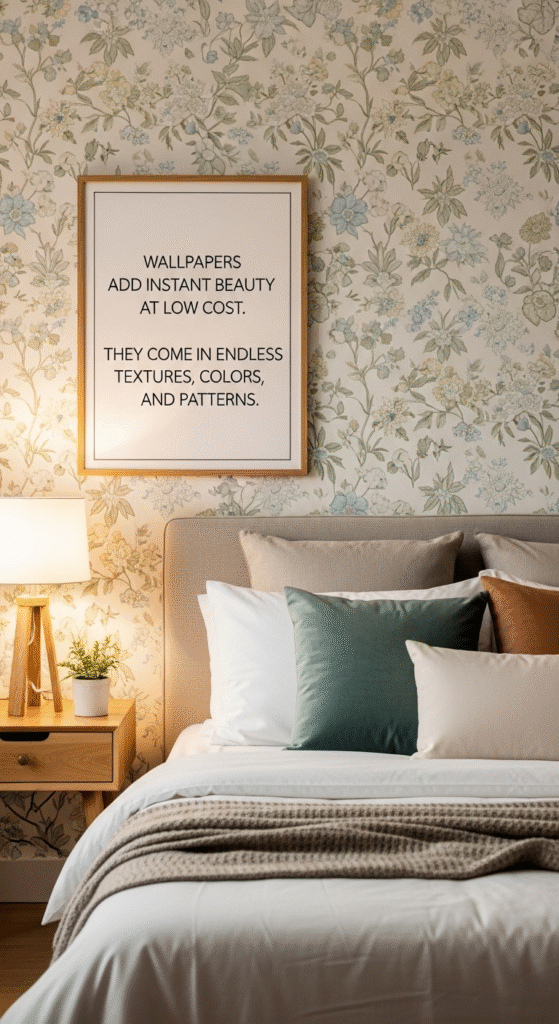
Wallpaper – Instant Beauty at Low Price

Wallpapers are a quick and cost-effective solution to upgrade any room. They come in endless designs, from floral patterns to 3D textures.

Advantages:

  • Easy to apply and remove

  • Available in a wide range of styles

  • Affordable compared to textured wall paints

Great for bedrooms, accent walls, and living rooms, wallpapers make interiors look luxurious without spending much.

Google_AI_Studio_2025-09-18T12_54_21.430Z

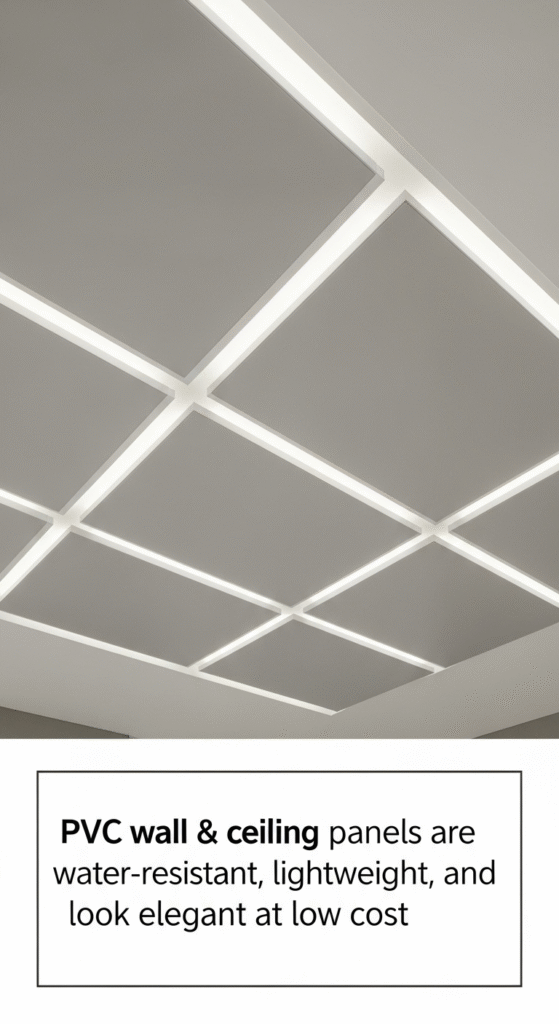
PVC Panels – Modern & Water-Resistant

PVC (Polyvinyl Chloride) panels are becoming popular as a low-cost alternative for wall and ceiling finishes. They are lightweight, easy to install, and waterproof.

Best uses:

  • False ceilings with LED lights

  • Bathroom walls

  • Kitchen ceilings

PVC panels give a modern sleek look while being very affordable compared to wood or gypsum boards.

Google_AI_Studio_2025-09-18T12_55_26.341Z

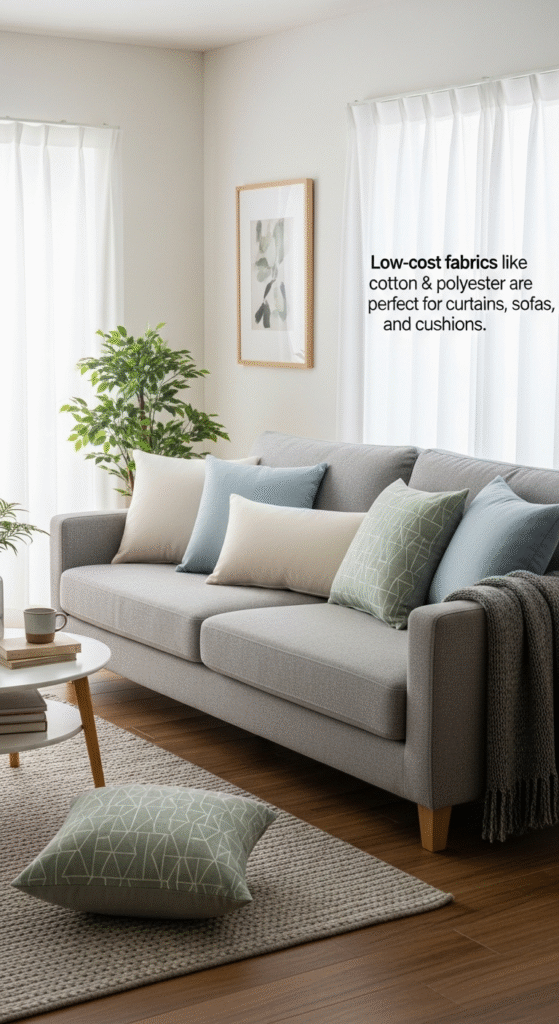
Affordable Fabrics – Comfort & Style

Fabrics like cotton, polyester, and blends are inexpensive but can instantly make a home cozy and stylish.

Best uses:

  • Curtains and drapes

  • Sofa and chair upholstery

  • Cushions and bed covers

These fabrics are durable, easy to clean, and available in countless patterns and colors. Choosing the right fabrics adds warmth and comfort to interiors without overspending.

Stone Veneer & Tiles – Luxury at Half Price

Natural stone looks premium but is costly. Stone veneers and tiles are budget-friendly substitutes that give the same rich feel.

Uses:

  • Accent walls in living rooms

  • Fireplace cladding

  • Outdoor facades

With proper lighting, stone veneers create a luxurious and rustic feel at a fraction of the cost of natural stone.

Smart Combinations for a Premium Look

The key to achieving stylish interiors on a budget is to combine these affordable materials wisely. For example:

  • Plywood furniture with laminate finish

  • Ceramic tiles with stone veneer accent walls

  • Painted walls with wallpaper highlights

  • PVC ceiling panels with affordable fabric curtains

By mixing these materials, you can achieve a premium, designer-level interior look while keeping costs under control.

Simple Tips to Make a Small Home Look Bigger

hall space

Nowadays, most people live in flats or small homes. When space is limited, the house often feels cramped, and you start wondering – “Where does all the space go once everything is arranged?”

But the truth is, with the right design, colors, lighting, and furniture choices, even a small home can feel open, spacious, and comfortable.

Let’s go step by step through 10 simple tips that will make your home look bigger, stylish, and welcoming.

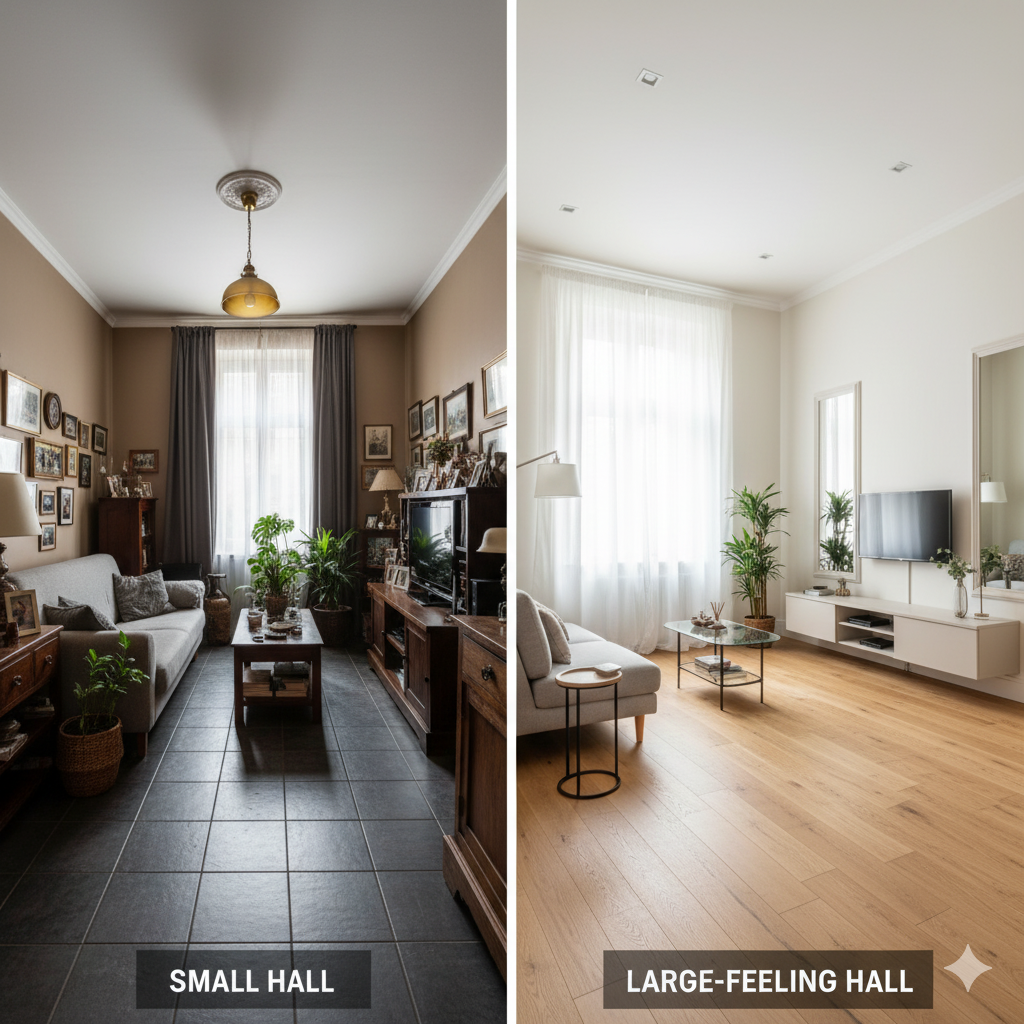
Use Light Colors

Many people paint their walls in dark colors – sometimes brown, sometimes blue, or even deep red. But dark shades absorb light, making the room appear smaller and tighter.

Instead, choose light shades like white, cream, light grey, or pastel tones.

  • Keep the walls, ceiling, and flooring in the same tone.

  • Light colors reflect natural light, instantly making the space look double in size.

In simple words – Light colors = Bigger space.

Mirror Magic 🪞

Mirrors are the best friend of small homes.

  • Place a large mirror in the living room or between the kitchen and dining area to make the room appear instantly bigger.

  • Mirrors don’t just decorate the wall; they add openness and depth.

Adding mirrored finishes to cabinets or furniture also enhances the feeling of spaciousness while amplifying the lighting effect.

Multifunctional Furniture 🪑

Placing too much furniture in a small home makes it feel crowded. Instead, choose multi-purpose furniture that serves more than one function.

  • Foldable dining table – use it only when needed and fold it away later.

  • Sofa-cum-bed – a sofa during the day, and a bed for guests at night.

  • Storage bed – sleep on top, while storing essentials below.

Smart furniture like this saves space and keeps the home tidy.

Smart Lighting 💡

Lighting plays a key role in making a home look bigger.

  • Don’t rely on just a single ceiling light.

  • Use layered lighting → ceiling lights + wall lamps + floor lamps.

  • Let in natural sunlight through large windows. Sunlight not only brightens the room but also creates a positive and cheerful atmosphere.

Remember – Bright room = Spacious room.

Open Space Concept 🏠

Open layouts are a big trend these days, and they work especially well in small homes.

  • Avoid building solid walls between the kitchen and dining area.

  • An open kitchen + dining concept makes the space look larger and more organized.

An open layout always gives a modern, airy, and welcoming look to any home.

Wall & Floor Design 🎨

Patterns and designs also play a big role in how large a room feels.

  • Paint or wallpaper with horizontal stripes makes the room appear wider.

  • Vertical stripes, on the other hand, highlight the room’s height.

  • Keep the flooring in the same tone across all rooms. Using different tiles in the living room and bedroom breaks the flow and makes the home look smaller.

Consistent flooring across the house creates continuity and enhances spaciousness.

Smart Storage 📦

One of the biggest challenges in small homes is – “Where do I store all my things?”

  • Install wall-mounted shelves or cabinets.

  • Use drawers under the bed.

  • Build wardrobes that reach the ceiling to make full use of vertical space.

By planning storage smartly, your home will stay neat, and you won’t waste precious space.

Keep Decor Minimal 🎀

A common mistake people make is filling small homes with too many showpieces or heavy furniture. This creates clutter.

👉 Instead, adopt a minimalist design:

  • Simple furniture

  • Sleek designs

  • A few but attractive decor items

Always remember – Less is More.

Curtain & Fabric Tips 🪟

Curtains and fabrics can completely change the look of a room.

  • Choose light and sheer curtains to allow natural light inside.

  • Always hang curtains from ceiling to floor – this makes the room look taller.

Avoid dark and heavy fabrics because they make the room feel closed and smaller.

Plants & Glass 🌿

Nothing adds life to a home better than indoor plants.

  • Greenery creates freshness and adds openness to the space.

  • Place small pots, hanging plants, or a tall plant in the corner.

Glass partitions or glass furniture also help – they separate spaces while still keeping them visually open since light can pass through.

Final Thoughts

Having a small home is not a problem at all. With the right planning, colors, lighting, and smart furniture choices, you can make your house look so beautiful that even a bigger house may not compare.

At the end of the day, it’s not about “how big the house is”, but about “how well-organized, bright, and comfortable it feels.”

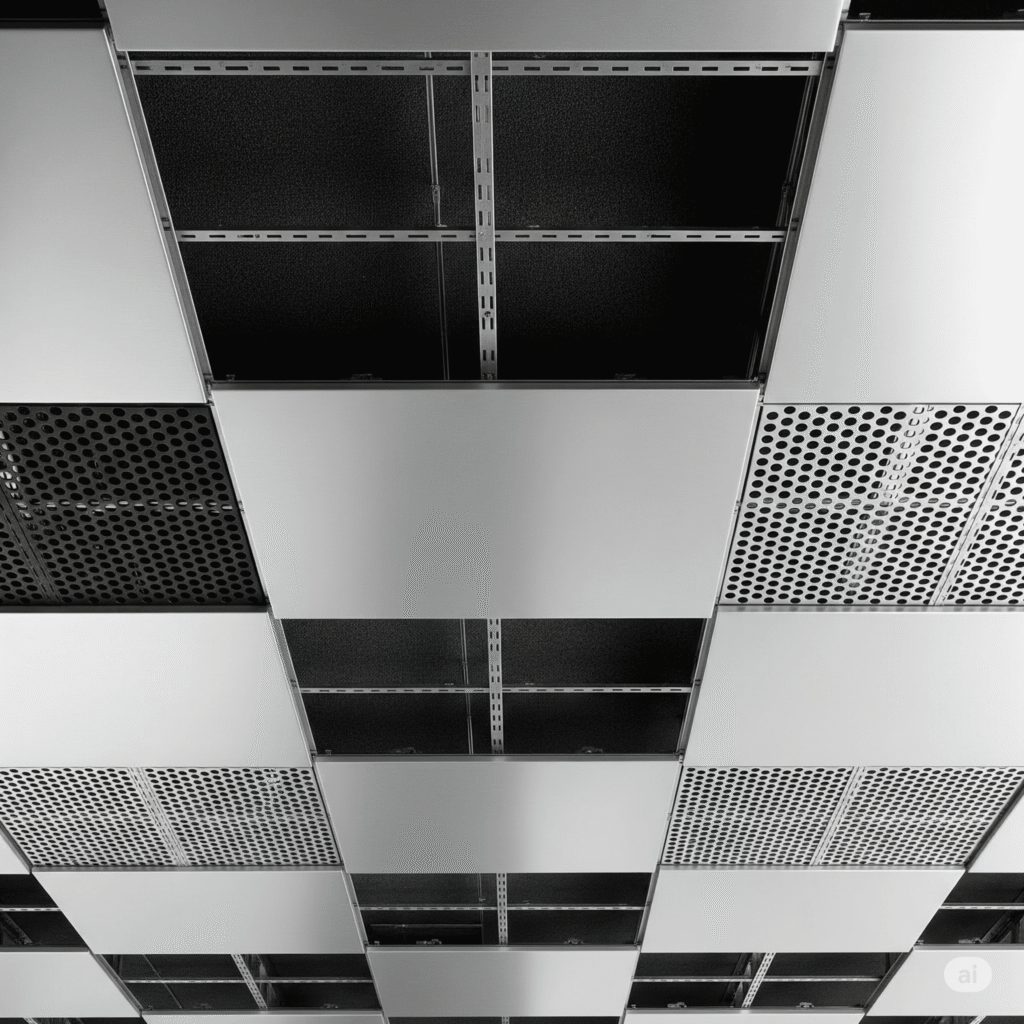
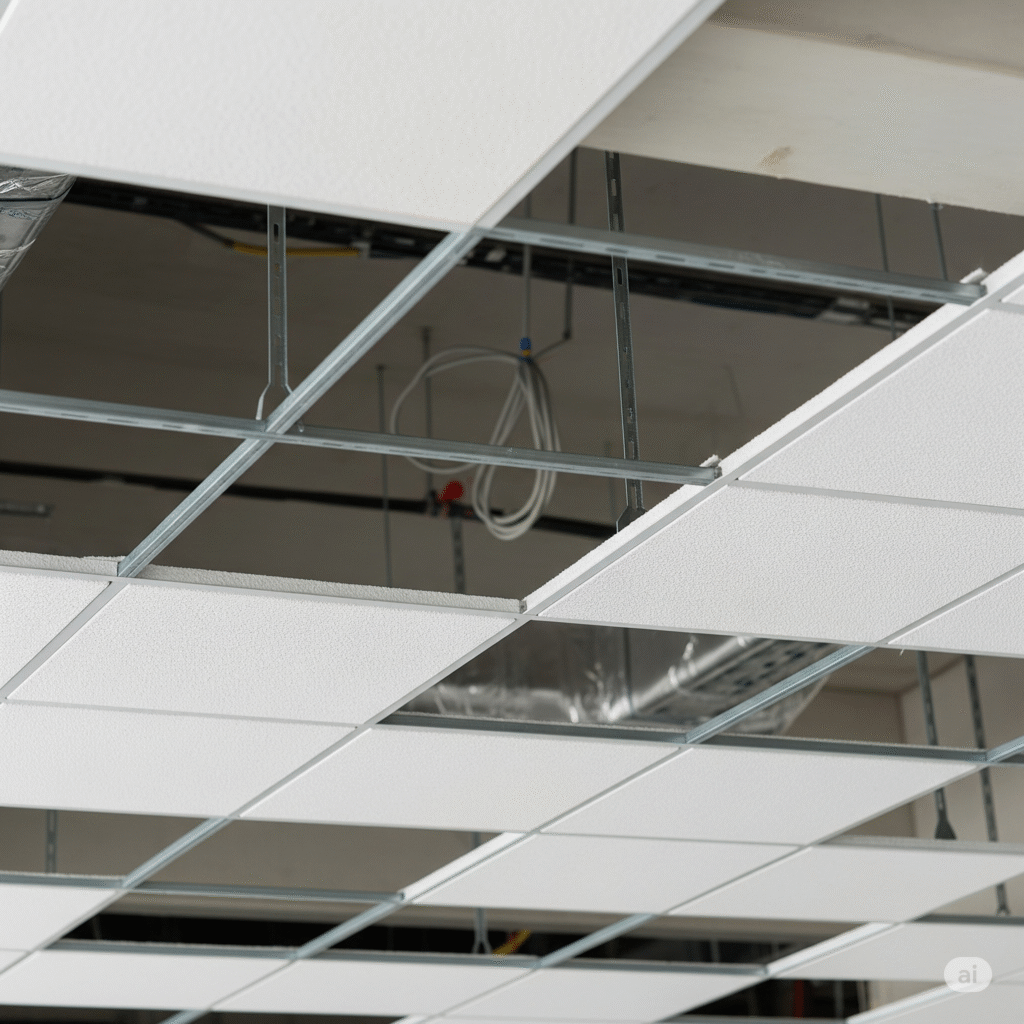
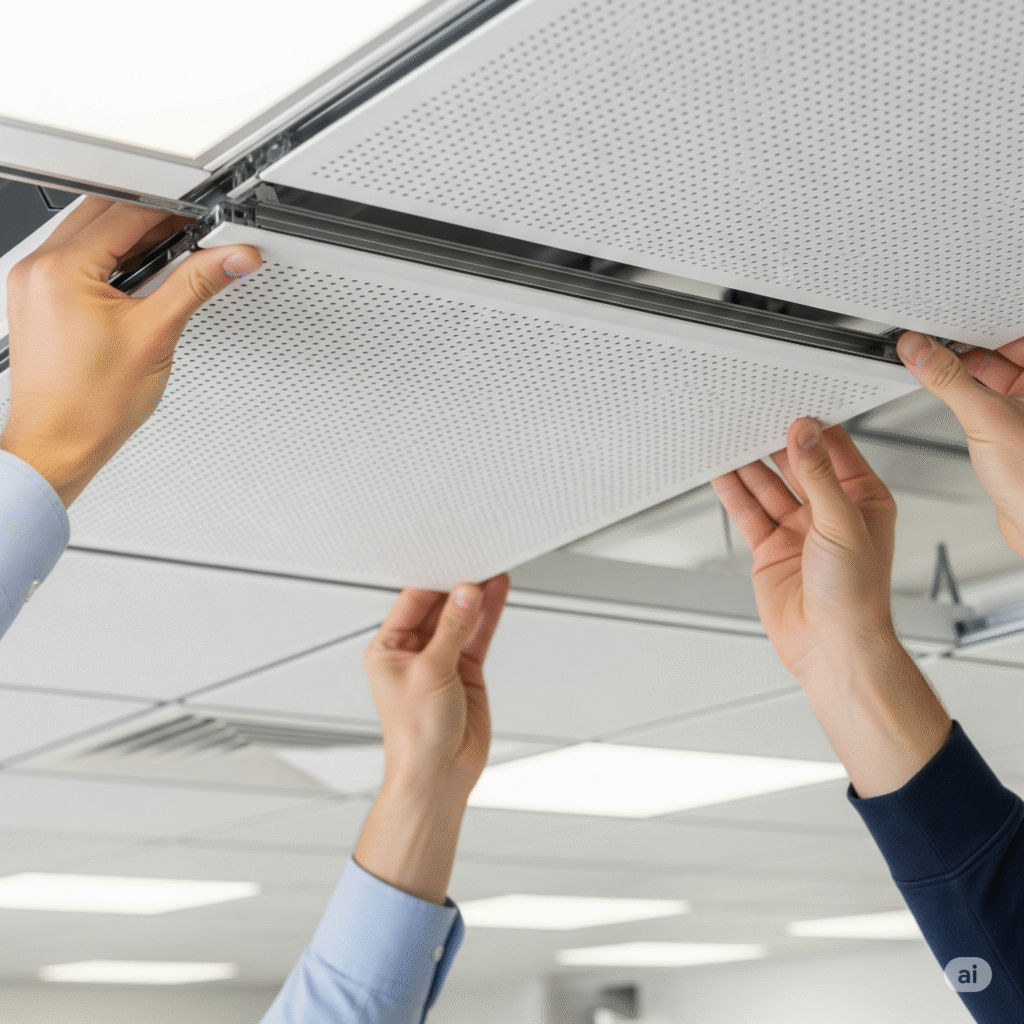
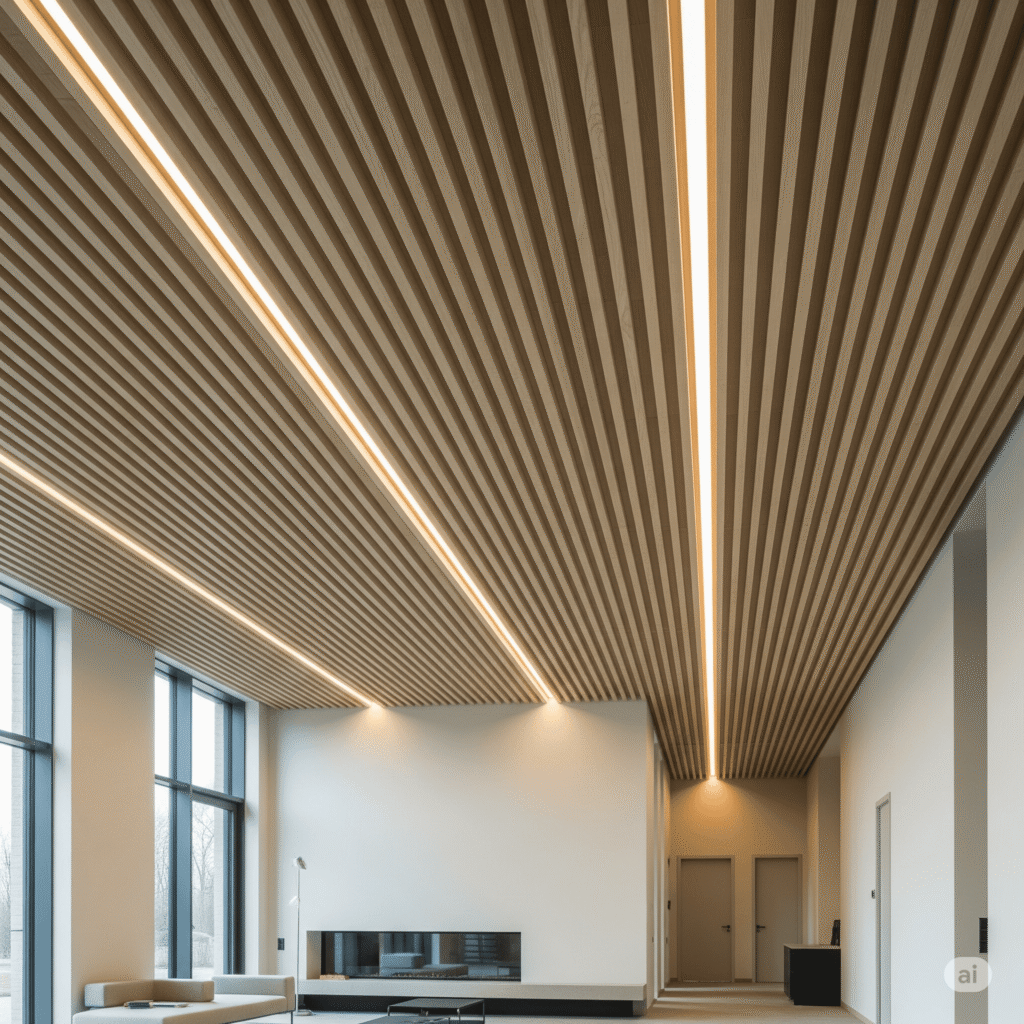
Modern and fully Auto Matic Metal Ceilings in Gujarat: A Blend of Beauty and Safety.

metal ceiling

Nowadays, the world of construction and interior design in Gujarat is witnessing rapid transformations. Due to government policies and increasing awareness, not only aesthetics but also safety and durability have become equally important. That is why the use of metal ceilings is increasing as a replacement for traditional ceiling materials.

To meet this rising demand, companies like Meta Fhino have already set up fully automated plants in Gujarat, producing high-quality metal tiles.

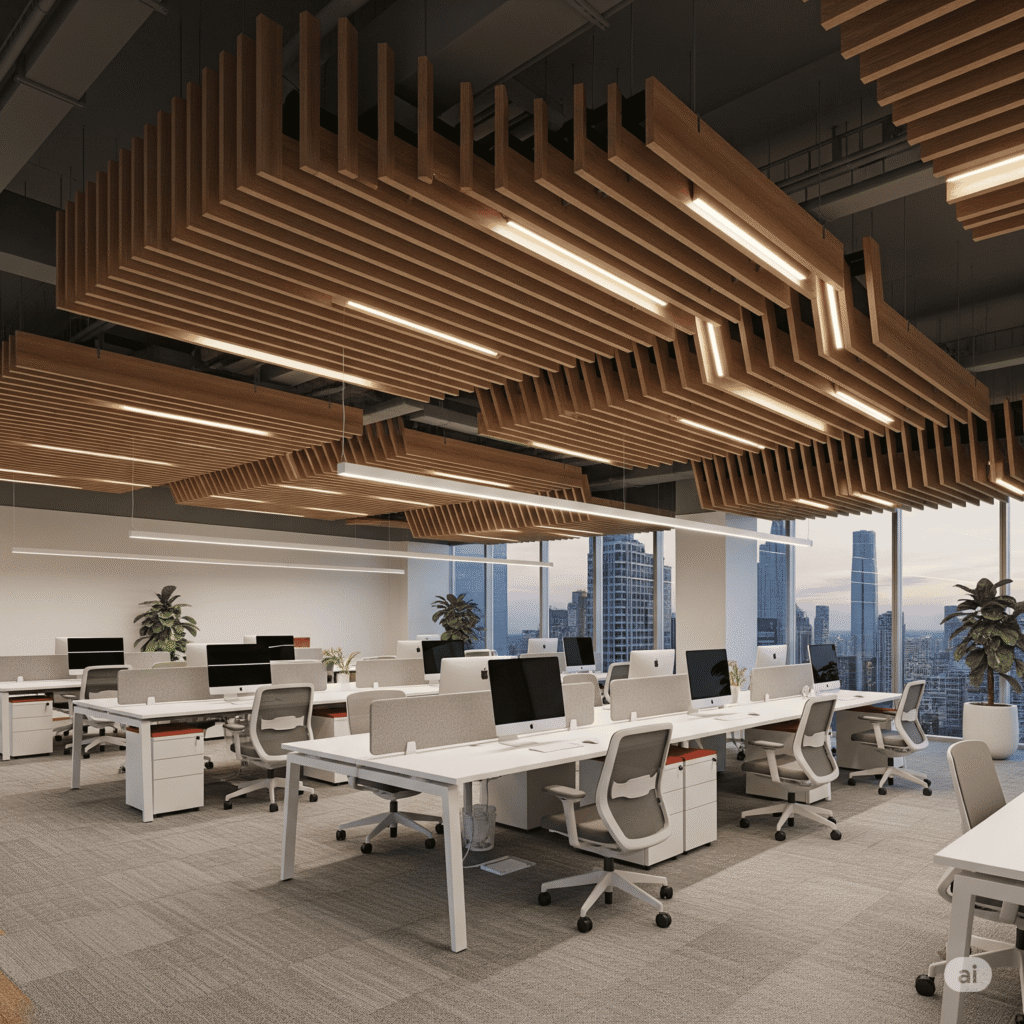
Key Benefits of Metal Ceilings

The use of metal ceilings is not just for enhancing looks but also for many practical reasons:

  • Fire Resistance: Metal tiles do not catch fire or release toxic smoke, making them extremely safe for public places such as schools, hospitals, malls, and airports.
  • Durability & Low Maintenance: Metal is resistant to moisture, pests, and mold. It doesn’t require frequent painting or repair, saving long-term costs.
  • Easy Cleaning: Metal ceilings can be easily cleaned with a damp cloth, which is crucial for maintaining hygiene.
  • Acoustic Performance: Especially perforated metal tiles absorb sound, helping maintain a quiet environment in offices or conference rooms.
  • Service Access: Tiles can be easily removed, making maintenance of wiring, pipes, and air conditioning ducts above the ceiling simple and convenient.

Types of Metal Ceilings and Their Applications

Metal ceilings are mainly made of aluminum and galvanized steel (GI). The main types are:

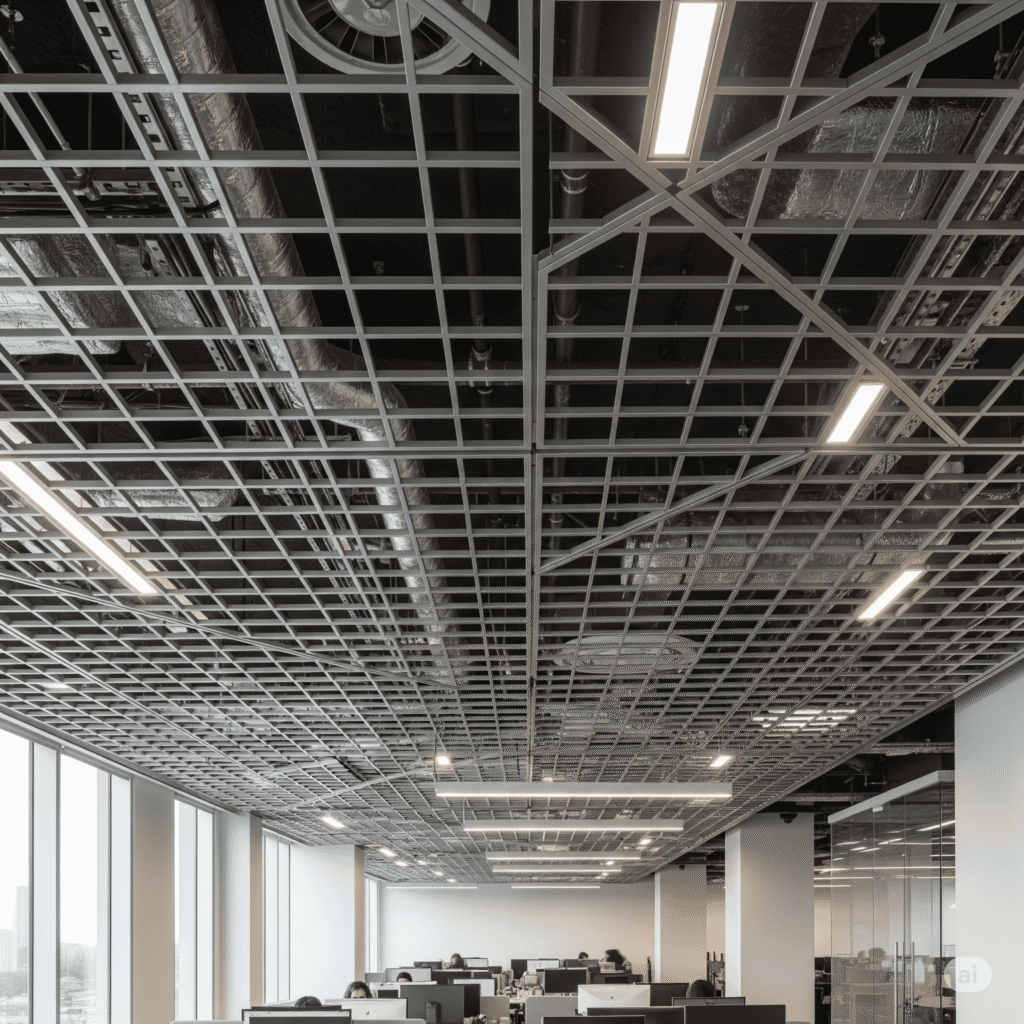
  1. Lay-In Tiles

    • Most common and economical type, placed on an exposed T-Grid.
    • Use: Offices, schools, hospitals, and retail stores.

Benefit: Very easy to install and maintain

         2.Clip-In Tiles

    • Tiles are clipped into the grid, hiding the grid for a flat, monolithic look.
    • Use: Malls, airports, and banks where a sleek look is required.
    • Benefit: Attractive and clean appearance.

            3.Linear Ceilings

    • Long, narrow metal panels give a modern and spacious effect.
    • Use: Corridors, lobbies, restaurants, and stations.
    • Benefit: Adds a stylish and elongated look to spaces.

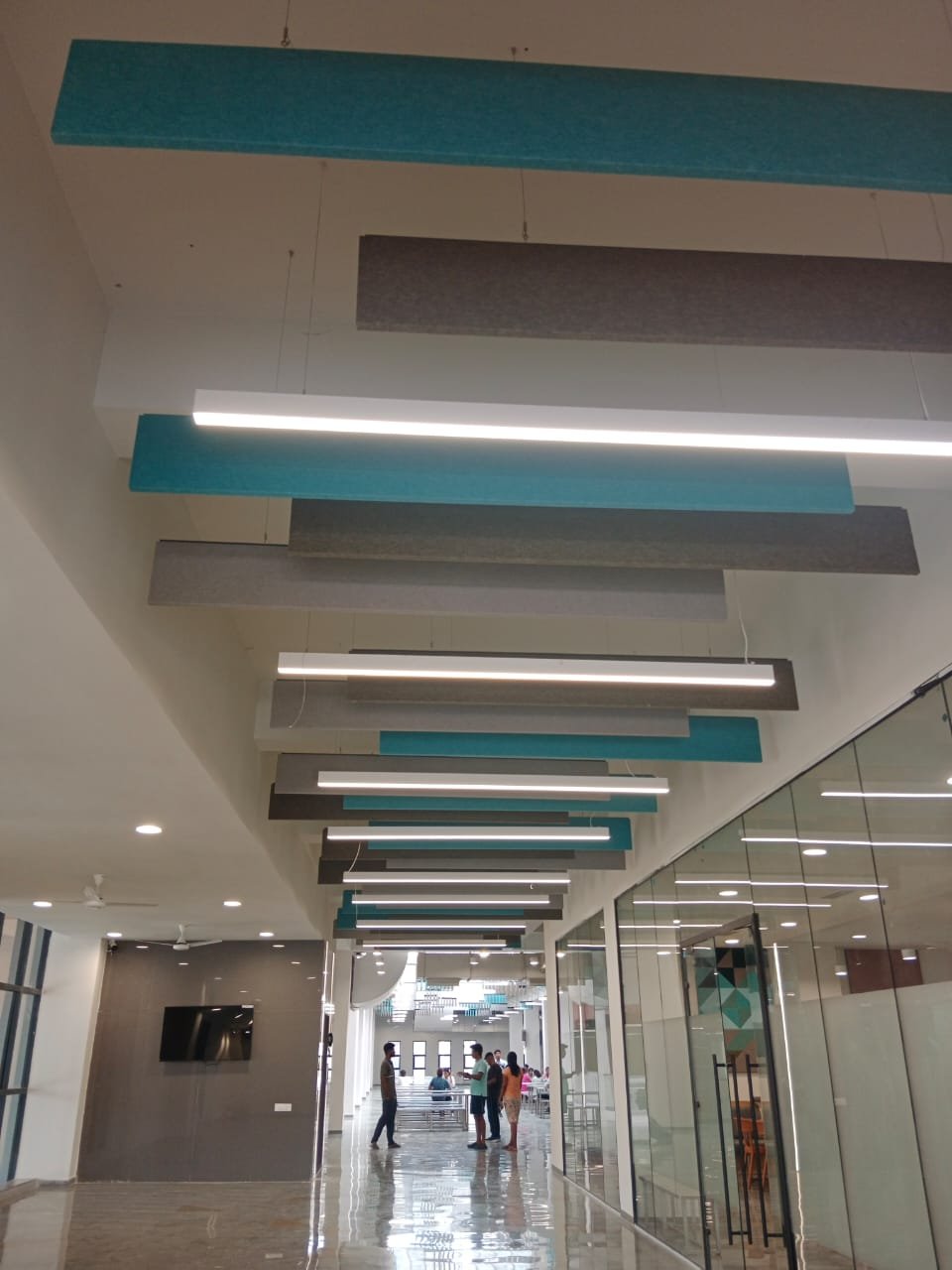
         4.Baffle Ceilings

    • Vertical hanging metal baffles are used, highly effective in absorbing sound.
    • Use: Auditoriums, conference rooms, and places requiring sound control.
    • Benefit: Excellent sound control and unique design.

             5.Open Cell Ceilings

    • Tiles have a honeycomb-style open design.
    • Use: Large open spaces such as malls or airports.
    • Benefit: Enhances visual appeal and provides a distinct look.

Key Points to Consider While Choosing

  1. Budget: For limited budgets, Lay-In Tiles are the best choice.
  2. Appearance: For a modern and clean look, choose Clip-In Tiles; for unique designs, Linear or Baffle ceilings are excellent.
  3. Maintenance: If frequent access above the ceiling is needed, Lay-In Tiles are the most convenient.
  4. Sound Control: For effective sound absorption, Baffle or perforated tiles are the best options.

Metal ceiling production and usage are steadily increasing in Gujarat, setting a fine example of safety and beauty together.
If you are planning to buy any type of metal tiles for your next project, you can directly order at this number: 97278 05050

If this information was helpful to you, don’t forget to leave a comment!

The Smart Choice for Modern High-Rise Buildings: Gypsum Ceiling and Walls

gypsum partition

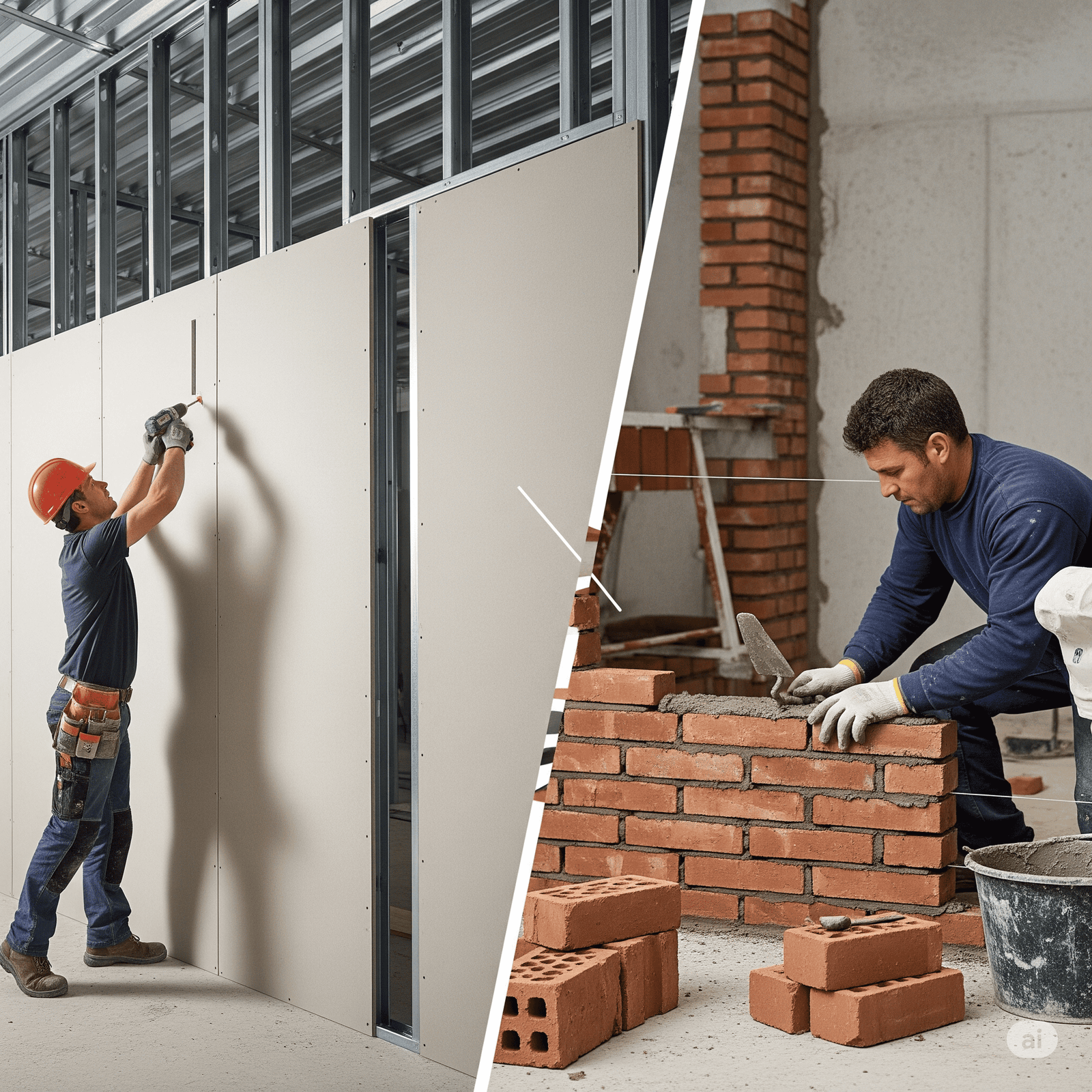
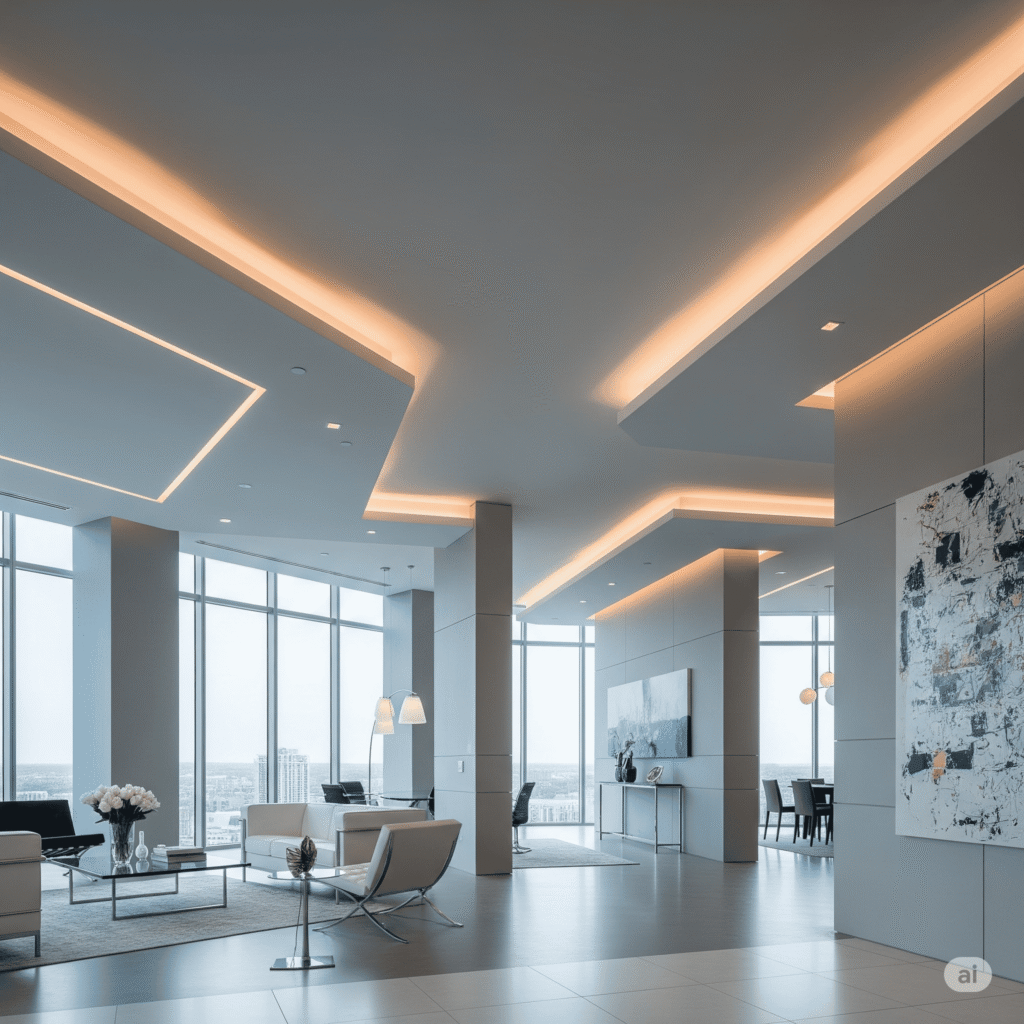
Today, our Gujarat, and particularly Ahmedabad, is making rapid strides in the construction of towering skyscrapers. Every builder and architect is writing a new chapter of success with new, advanced designs. However, a challenge still exists in the construction sector: the excessive time spent on civil work in the building’s interior. This delay prevents projects from being handed over to customers on time and also affects the project’s cost.

The solution to this problem has already been found in other major cities like Bengaluru, Chennai, Hyderabad, Mumbai, Pune, and Delhi-NCR, where builders have adopted Gypsum Dry Wall instead of traditional construction. This technology can bring about a revolutionary change for Gujarat as well.

Why is Gypsum Dry Wall the Smart Choice?

  1. Fast Construction and Time Savings

Installing gypsum dry walls takes very little time. Where building a brick wall can take 2-3 weeks, a gypsum partition can be ready in just 1-2 days. This reduces the overall project timeline, allowing you to hand over the project to the customer on schedule.

  1. Cost-Effectiveness

In today’s expensive times, cost control is very important. A gypsum partition costs about 30% to 50% less than a traditional wall. See the comparison below:

Detail

Traditional Wall (Block+Plaster)

Gypsum Partition

Total Cost (100 sq ft)

₹26,500 to ₹35,500

₹9,500 to ₹17,500

Construction Time

Long (2-3 weeks)

Very fast (1-2 days)

Cleanliness

More mess

Less mess

Weight

Heavy

Lightweight

Safety: A Shield Against Fire and Earthquakes

Gypsum walls are not just fast and inexpensive; they are also superior from a safety perspective.

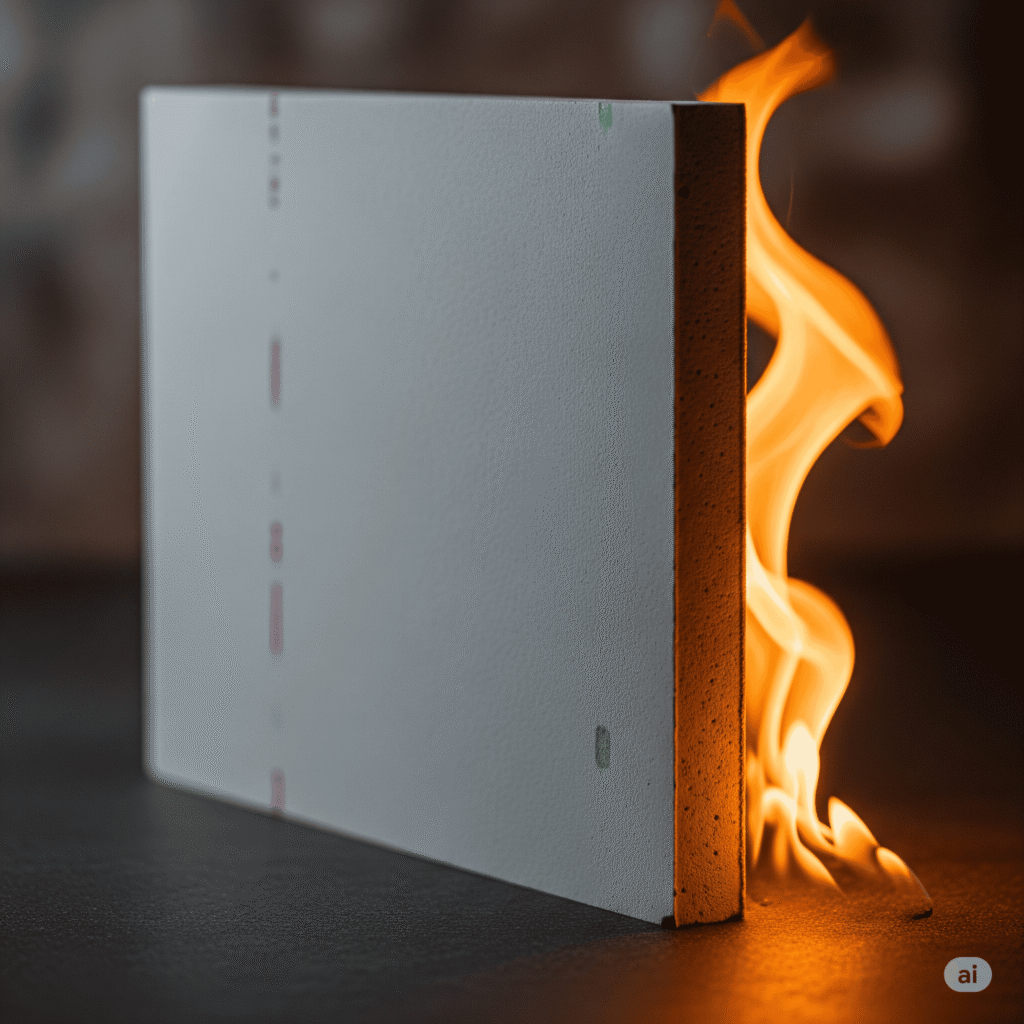
  • Fire Resistance:
    Gypsum boards naturally contain water. In case of a fire, this water turns into steam and absorbs heat, which slows down the fire and prevents its spread. For high-risk buildings, special “Type X” or “Type C” fire-rated gypsum boards are available, which increase fire resistance.
  • Earthquake Resistance:
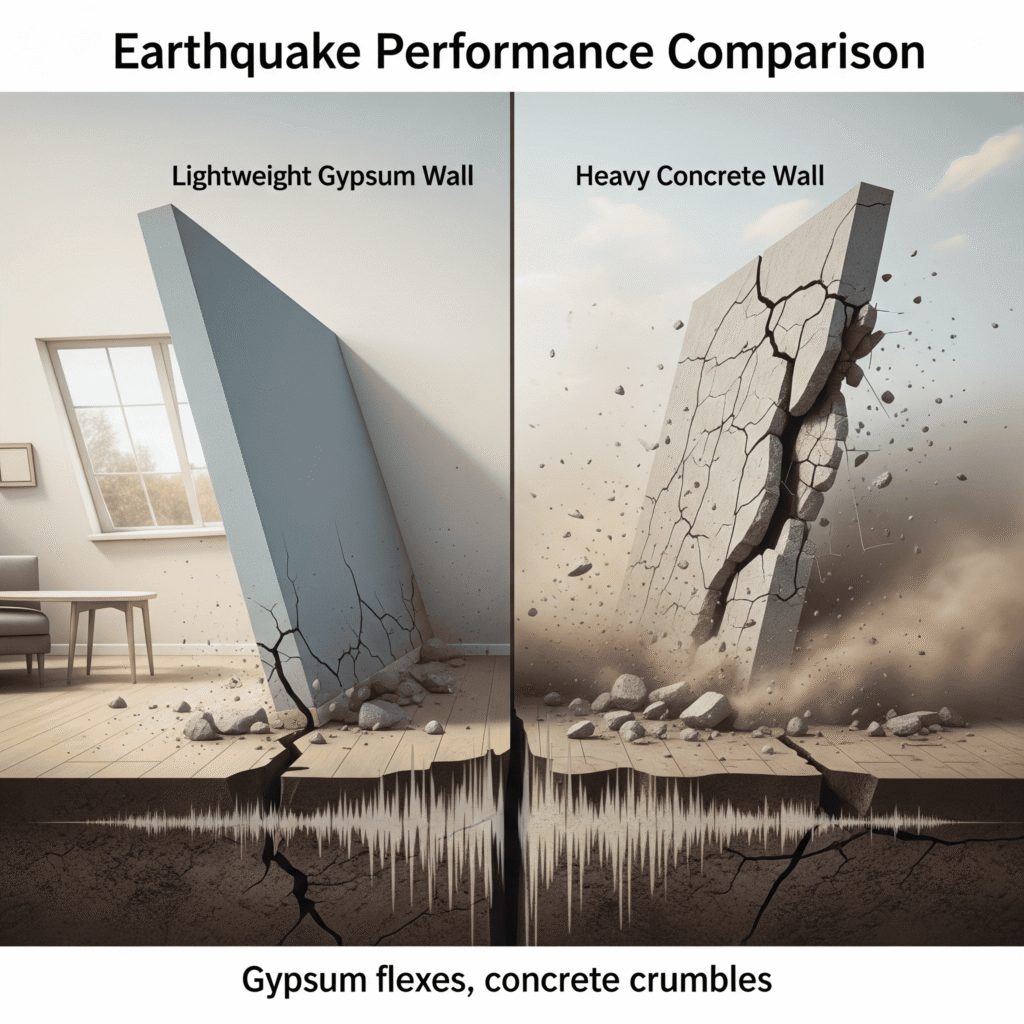
    Since gypsum walls are lightweight, they are less dangerous than brick or concrete walls in the event of an earthquake. They do not provide any support to the main structure. Even if cracks appear, they can be easily repaired.

Benefits for Both Customers and Builders

Using gypsum walls benefits both the customer and the builder.

  • For the Customer:

    The reduction in the cost of constructing the flat makes it easier for the customer to stay within budget. In addition, they can easily make changes according to interior design and Vastu principles.

  • For the Builder:

    Completing the project on time accelerates the project handover process. This saves both the builder’s time and money.


Today, providing customers with quality products within a budget is a challenge. By adopting modern and efficient materials like gypsum, Ahmedabad’s builders can turn this challenge into a great success. This is not just a new method of construction but a smart investment for the future.

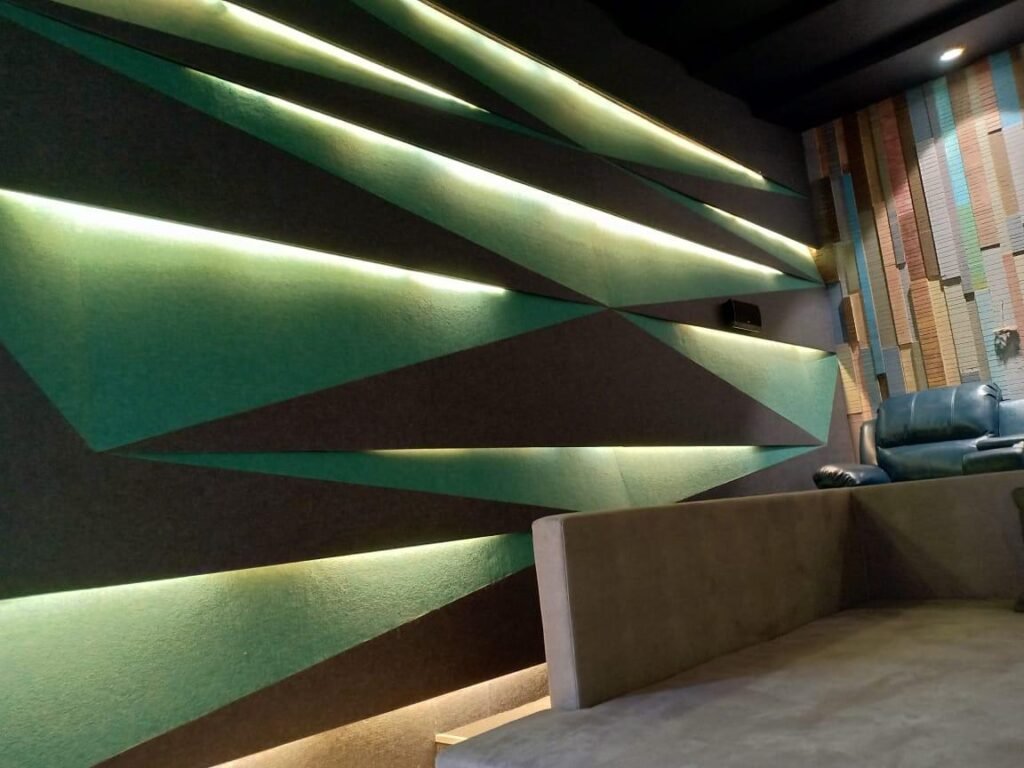
“Want to build a home theatre at home on a very low budget? But facing acoustic problems? Then no need to worry anymore — the complete solution is provided below in full detail.”

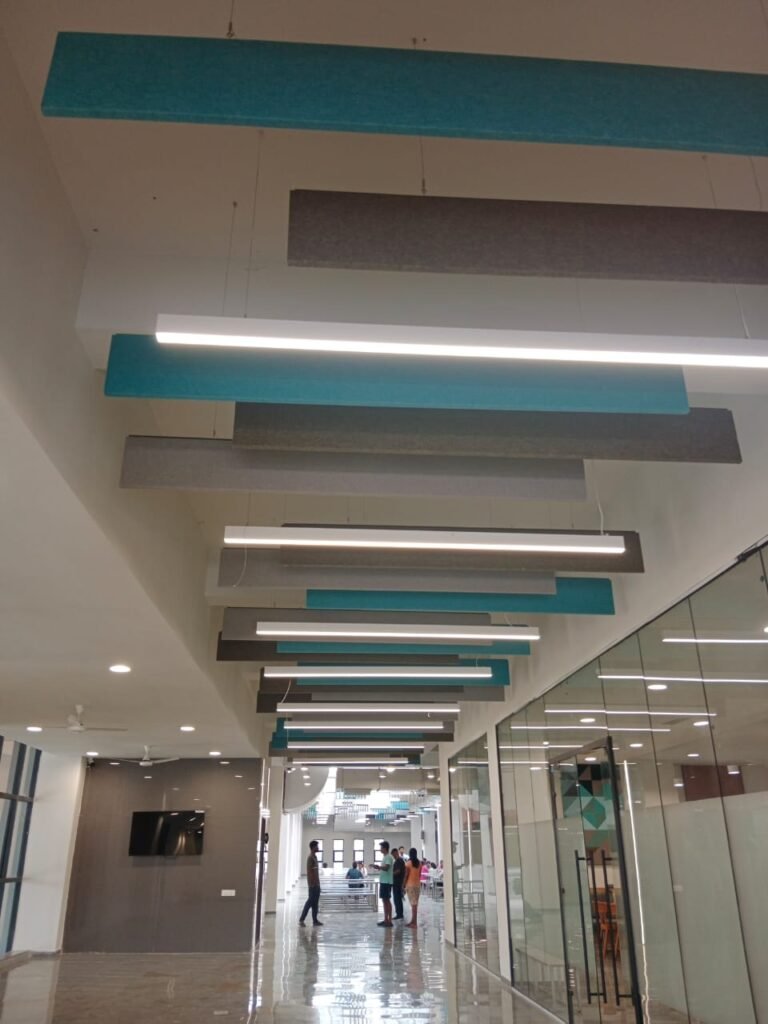
baffle ceiling

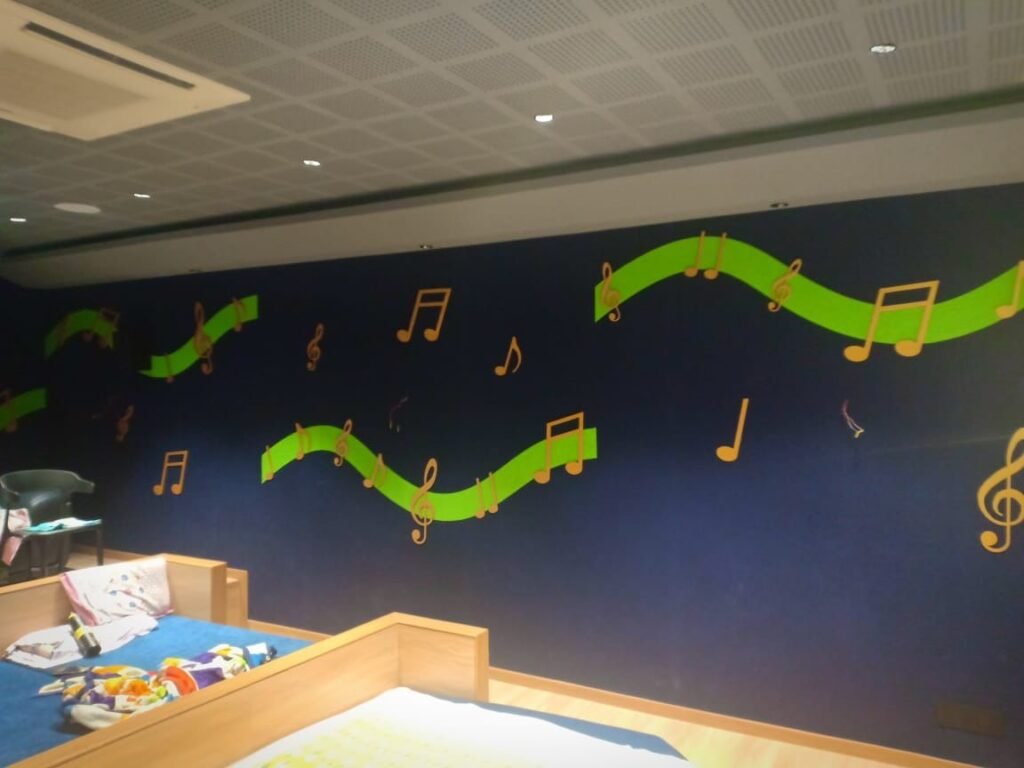
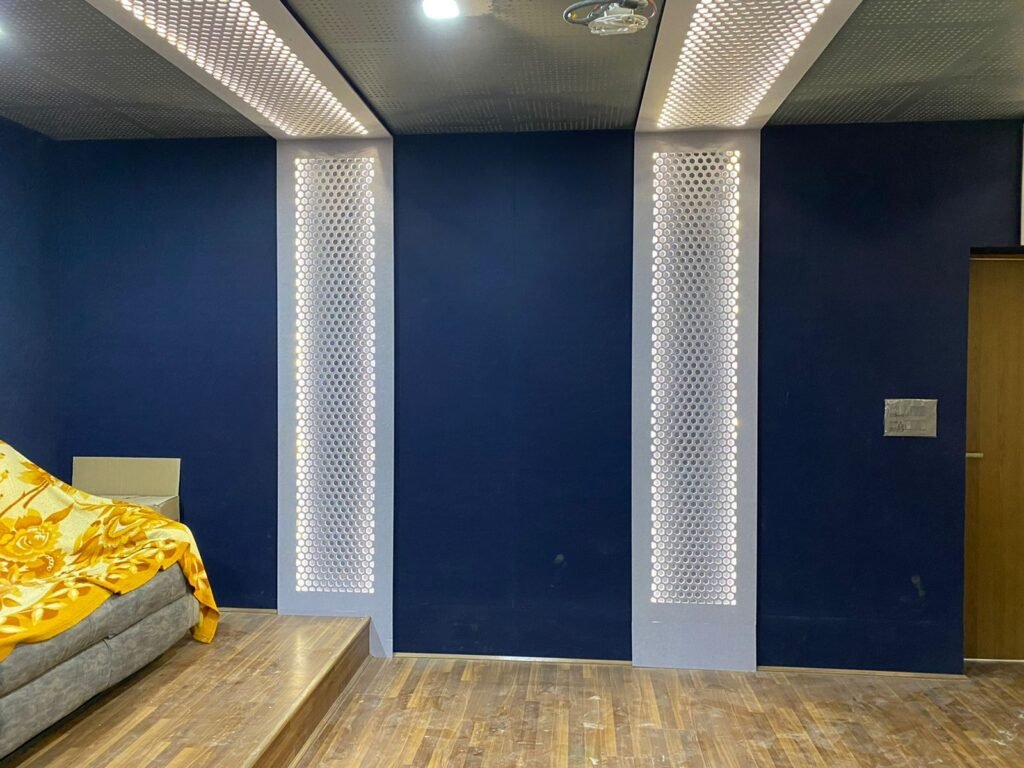
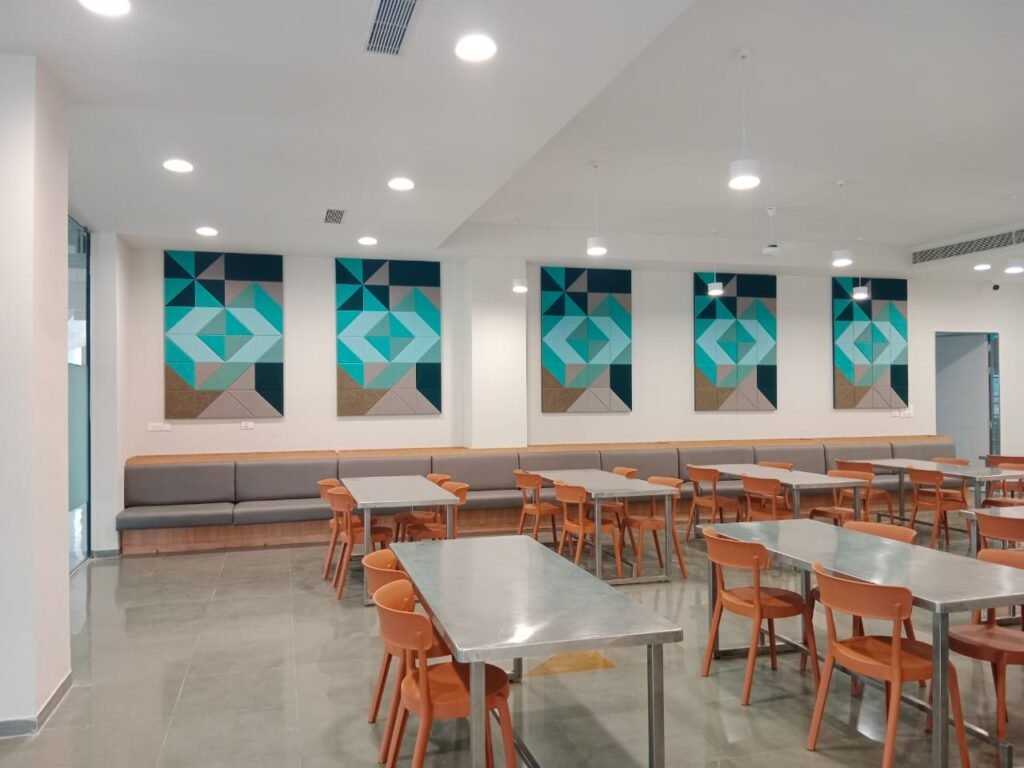
Polyester Fibre Sheet is a non-woven material made by compressing recycled polyester fibres (often from PET bottles) into dense, rigid, or semi-rigid panels. It is widely used for acoustic insulation, thermal insulation, decorative panels, and wall/ceiling linings.


What types of designs can you create?

Flat home theater

personal home theater

home theater wall paneling

Baffle photo

canteen wall paneling

Technical Specifications

Property Details
Material 100% Recycled Polyester Fiber (PET)
Density 120 – 220 kg/m³ (customizable)
Thickness 6mm, 9mm, 12mm, 24mm (most common: 9mm/12mm)
Sheet Size 1220 mm x 2440 mm (4ft x 8ft)
Weight 1.8 – 4.5 kg/sheet (depending on thickness)
NRC Rating 0.35 – 0.90 (depending on design/placement)
Fire Rating B1 or B2 Class (as per standards like ASTM)
Thermal Conductivity Approx. 0.034 – 0.040 W/m·K
Tensile Strength Good; durable for handling and mounting
Color Options Wide range (grey, black, red, blue, beige, etc.)
Eco-Friendly Yes – Made from recycled materials


 Applications

  1. Acoustic Treatment:

    • Walls & ceiling panels in theaters, offices, schools, etc.
    • Reduces echo & improves sound clarity.
  2. Interior Decoration

    • Colored & shaped panels for stylish looks.
    • Used behind TVs, desks, or wall designs.
  3. Thermal Insulation

    • Adds a moderate insulation barrier in partitions or ceilings.
  4. Industrial Use

    • Machinery enclosures, studio walls, acoustic booths.


 Installation Methods

  • Direct pasting using adhesives (like Fevicol SH or PU-based glue)
  • Hook & loop (Velcro)
  • Mechanical fasteners or frame-based mountings
  • Can be cut with a knife or laser for CNC shapes


 Advantages

  • 🔇 Excellent sound absorption

  • 🛠️ Lightweight and easy to install

  • 🌱 Eco-friendly (recycled)

  • 🔥 Fire retardant

  • 💧 Moisture-resistant

  • 🌈 Aesthetic & color customizable

  • 🧼 Easy to clean (dry cloth or vacuum)

Test Certifications (check with supplier)

  • NRC Report (Acoustic test)
  • Fire Retardancy certificate
  • Density and strength test report
  • Formaldehyde Emission – Low/Zero


 Best Use Cases

  • Home Theaters

  • Studios (Podcast, Music, Voice Over)

  • Corporate Conference Rooms

  • Classrooms, Auditoriums

  • Restaurants and Cafés

  • Noise-sensitive office cabins

Important Test Reports & Certificates for Polyester Fiber Sheet

 1. NRC Report (Noise Reduction Coefficient) – Acoustic Performance

  • What is it?
    The Noise Reduction Coefficient (NRC) is a rating that shows how much sound a material absorbs. Values range from 0 (no absorption) to 1 (full absorption).
  • Standard Testing Method:
    • ASTM C423 (Standard Test Method for Sound Absorption and Sound Absorption Coefficients by the Reverberation Room Method)
    • ISO 354
  • Typical Values for Polyester Fiber Panels:
    • 6mm sheet: NRC ~ 0.30
    • 9mm sheet: NRC ~ 0.50–0.65
    • 12mm sheet with air gap: NRC ~ 0.75–0.90
  • Why it matters:
    Higher NRC helps reduce echo and reverberation in a room, making it ideal for theaters, offices, and studios.
  • Ensure Supplier Provides:
    • Test lab certificate (e.g., from ARAI, NABL lab, or Intertek)
    • Testing based on ASTM C423 or ISO 354


 2. Fire Retardancy Certificate

  • What is it?
    Verifies that the sheet is fire-resistant or self-extinguishing. Important for safety compliance in public buildings.
  • Standard Testing Methods:
    • ASTM E84 (USA) – Surface Burning Characteristics
    • EN 13501-1 (Europe) – B-s1, d0 is common class
    • IS 15061 or IS 11871 (India)
  • Fire Rating Classes:
    • Class B1: Flame-retardant
    • Class B2: Normal flammability
    • Class A: Non-combustible (rare for fiber panels)
  • Ensure Supplier Provides:
    • Certified test report from a government-approved lab (like SGS, Intertek, ARAI)
    • Specifies flammability rating, smoke emission, and burning time


 3. Density and Strength Test Report

  • What is it?
    Shows the material’s compressive strength, tensile strength, and overall density (kg/m³), which affects acoustic and durability properties.
  • Typical Values:
    • Density: 120–220 kg/m³
    • Tensile Strength: Moderate (non-tearable in normal handling)
    • Compression Strength: Withstands mild load pressure without deformation
  • Standard Testing Methods:
    • ISO 845 for Density
    • ISO 1798 / ASTM D3574 for Tensile Strength
    • IS 2380 or ISO 3386 for Compression
  • Ensure Supplier Provides:
    • Density report
    • Strength test certificate from NABL-accredited lab
    • Product data sheet with declared mechanical properties


 4. Formaldehyde Emission Test – Low/Zero VOC

  • What is it?
    Measures Volatile Organic Compounds (VOC) and formaldehyde emissions from the sheet. Necessary for health and green building compliance (LEED/GREEN PRO certified projects).
  • Testing Standard:
    • EN 717-1 (Formaldehyde Release – Europe)
    • ASTM D5116 (USA)
    • JIS A 1460 (Japan)
  • Safe Emission Values:
    • E1 Class: ≤ 0.124 mg/m³ (low-emission)
    • E0 Class: ~ 0.05 mg/m³ (nearly zero)
    • Some sheets are formaldehyde-free
  • Ensure Supplier Provides:
    • VOC/Formaldehyde test report from SGS/Intertek/NABL lab
    • Declare “E1/E0 certified” or “Zero VOC” on packaging or brochure


📄 How to Get These Reports?

You should request these directly from your manufacturer or distributor. Use this checklist:

  • 🔲 NRC Lab Certificate (ASTM C423 or ISO 354)
  • 🔲 Fire Rating Certificate (ASTM E84, EN 13501-1)
  • 🔲 Density & Strength Data Sheet (ISO 845, ISO 1798)
  • 🔲 VOC/Formaldehyde Certificate (EN 717-1 or ASTM D5116)

If you are interested in this work, please contact us at this ecotone acoustic  in India any location Design and execution will be provided. If you find these details useful, please like and comment.


“Do you face noise, echo, or poor sound quality issues at home, in the office, or in a studio?”

“(If yes, then the solution is given below for you.)”

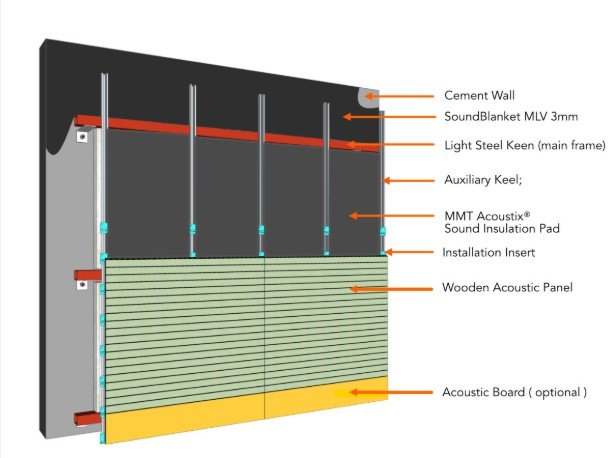
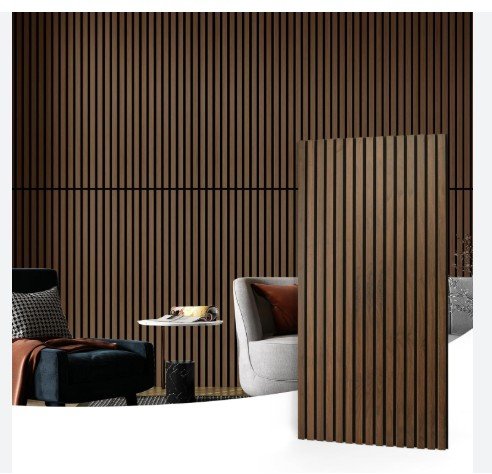
The Wooden Acoustic Panel System with ecotone Sound Insulation Pad offers a complete soundproofing and acoustic treatment solution for homes, studios, offices, and theaters.

Top Reasons to Use This Product

1. 🔇 Superior Soundproofing Performance

  • The SoundBlanket MLV 3mm and MMT Acoustic Pads significantly reduce airborne noise, vibrations, and echo.
  • Ideal for recording rooms, home theaters, meeting rooms, or residential privacy.

2. 🎶 Improves Acoustic Quality

  • The Wooden Acoustic Panels absorb mid and high-frequency sounds, ensuring clear, natural audio quality.

3. 🛠️ Modular & Easy Installation

  • Designed with a steel frame and insert system for secure and repeatable installation.
  • No messy glue or complicated tools needed — perfect for interior professionals.

4. 🔥 Fire-Resistant & Safe Materials

  • Uses non-combustible, certified acoustic materials.
  • Safe for commercial, industrial, and home use

5. 🧱 Strong & Long-Lasting Structure

  • The steel framing and auxiliary keels provide high durability.
  • Resistant to humidity, warping, and long-term wear.

6. 🎨 Aesthetic & Customizable Design

  • Wooden panels come in multiple colors and finishes.
  • Match your modern or traditional interior effortlessly.

7. 🌱 Eco-Friendly Construction

  • Made from environmentally safe, recyclable components.
  • No harmful chemicals or heavy VOC emissions.

📌 Conclusion:

The Wooden Acoustic Panel with MMT Insulation System is the perfect choice if you want:

  • Peaceful interiors
  • Professional sound quality
  • Stylish acoustic walls
  • Easy and safe installation

“Now, understand how to install it.”

🔹 Part 1: Cement Wall Preparation

Step 1 – Surface Cleaning & Check

  • Ensure the brick mas with plaster wall is flat, dry, and dust-free.
  • Remove any loose particles or paint for proper bonding.

🔹 Part 2: Sound Blanket MLV 3mm Fixing

Step 2 – MLV Application

  • Attach SoundBlanket MLV 3mm directly to the cement wall using adhesives or fasteners.
  • Overlap seams by 2 inches and seal with acoustic tape.

Part 3: Light Steel Keen Frame Installation

Step 3 – Main Frame Setup

  • Fix Light Steel Keens (main frame) vertically at regular intervals.
  • Use screws or anchors suitable for concrete wall support.

Part 4: Auxiliary Keel Attachment

Step 4 – Keel Support Grid

  • Install auxiliary keels horizontally over the steel keens.
  • These support the weight of the panel and maintain structural integrity.

Part 5: Ecotone Sound Insulation Pad Installation

Step 5 – Padding for Acoustic Insulation

  • Place Ecotone sound insulation pads inside the grid.
  • These pads block airborne sound and reduce echo.

Part 6: Installation Insert Fixing

Step 6 – Insert Clips or Support Anchors

  • Fix installation inserts to hold panels securely in place.
  • Ensure spacing matches panel size for a snug fit.

Part 7: Ecotone Wooden Acoustic Panel Mounting

Step 7 – Panel Placement

  • Carefully mount wooden acoustic panels on the installation inserts.
  • Press firmly for proper alignment and support.

Optional: Acoustic Board (Bottom Layer)

Step 8 – Add Optional Layer

  • Fix acoustic board at the bottom (if extra insulation needed).
  • This layer adds bass absorption and enhances aesthetics.

Final Tips for Acoustic Panel Installation

  • Always measure your wall dimensions before purchasing material.
  • Use certified acoustic materials for better results.
  • Maintain a gap between wall and panels if air cavity insulation is desired.

👉 Recommended for:
✅ Home Theaters
✅ Recording Studios
✅ Conference Rooms
✅ Hotels & Luxury Spaces
✅ Schools & Auditoriums

📏 1. Standard Sizes (mm):

Panel Size Dimensions
2 ft x 8 ft 600mm x 2400mm
1 ft x 8 ft 300mm x 2400mm
4 ft x 8 ft (rare) 1220mm x 2400mm (custom/big walls)
Height Customizable (cuttable)

📐 2. Thickness:

LayerThickness
Front Slat (MDF/ply)12mm – 15mm
Felt Backing (Polyester)9mm – 12mm
Total Panel Thickness~21mm – 27mm

Higher thickness = better sound absorption and premium look.

🎨 3. Popular Color Options:

Finish NameShade TypeLooks Like
Natural OakLight woodElegant, modern
WalnutMedium brownRich, classy
Black AshDeep black wood grainLuxury / Studio
TeakwoodWarm orange-brownIndian interiors
WengeDark chocolateBold interiors
Grey OakGrey with wood grainsContemporary
White Washed OakLight white tint on woodScandinavian look
Custom Duco PaintAny shade (RAL/NCS)Smooth matte finish

4. Material Options:

  • Slats: MDF, HDF, or Natural Veneer on plywood.
  • Backing: 9–12mm Polyester Felt Sheet (Black or Grey standard).
  • Fire-retardant and moisture-resistant options available.

🧩 5. Slat Design (Groove):

Slat WidthGroove WidthLook
27mm slat + 13mm grooveModern, standard
15mm slat + 15mm grooveFiner detailing
40mm slat + 20mm grooveHeavy wood look