
SYNEWS

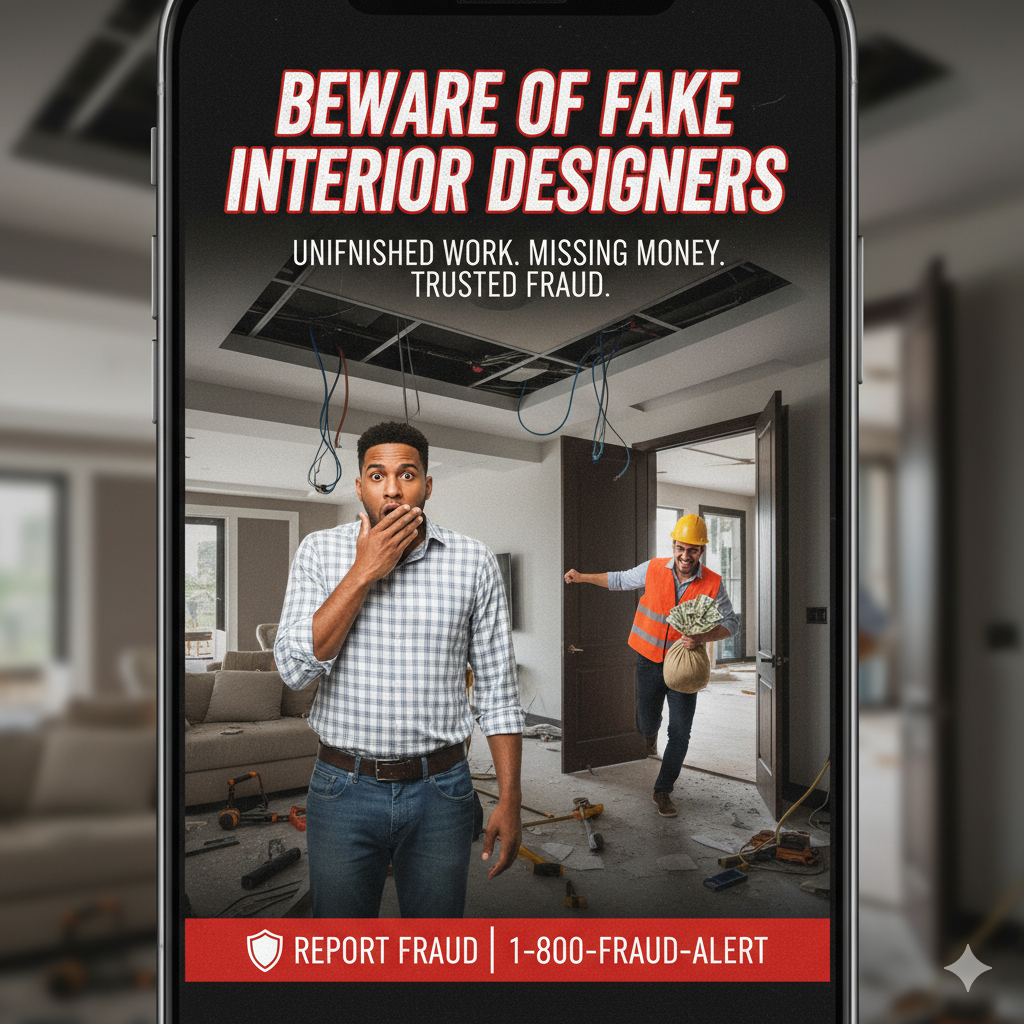
Beware of Fake Interior Designers — A Real Problem in 2025

Interior Fraud Awareness: Beware of Fake Interior Designers

In today’s fast-growing interior market, many homeowners fall victim to fake or unprofessional interior designers who promise beautiful designs at low prices — but disappear after taking advance payments or deliver poor-quality work.

This awareness aims to educate customers so they can identify and avoid such frauds before it’s too late.

 Common Fraud Tactics

  1. Fake Portfolios:
    They show photos of completed projects that are not theirs — often copied from the internet or other designers.

  2. Advance Payment Scams:
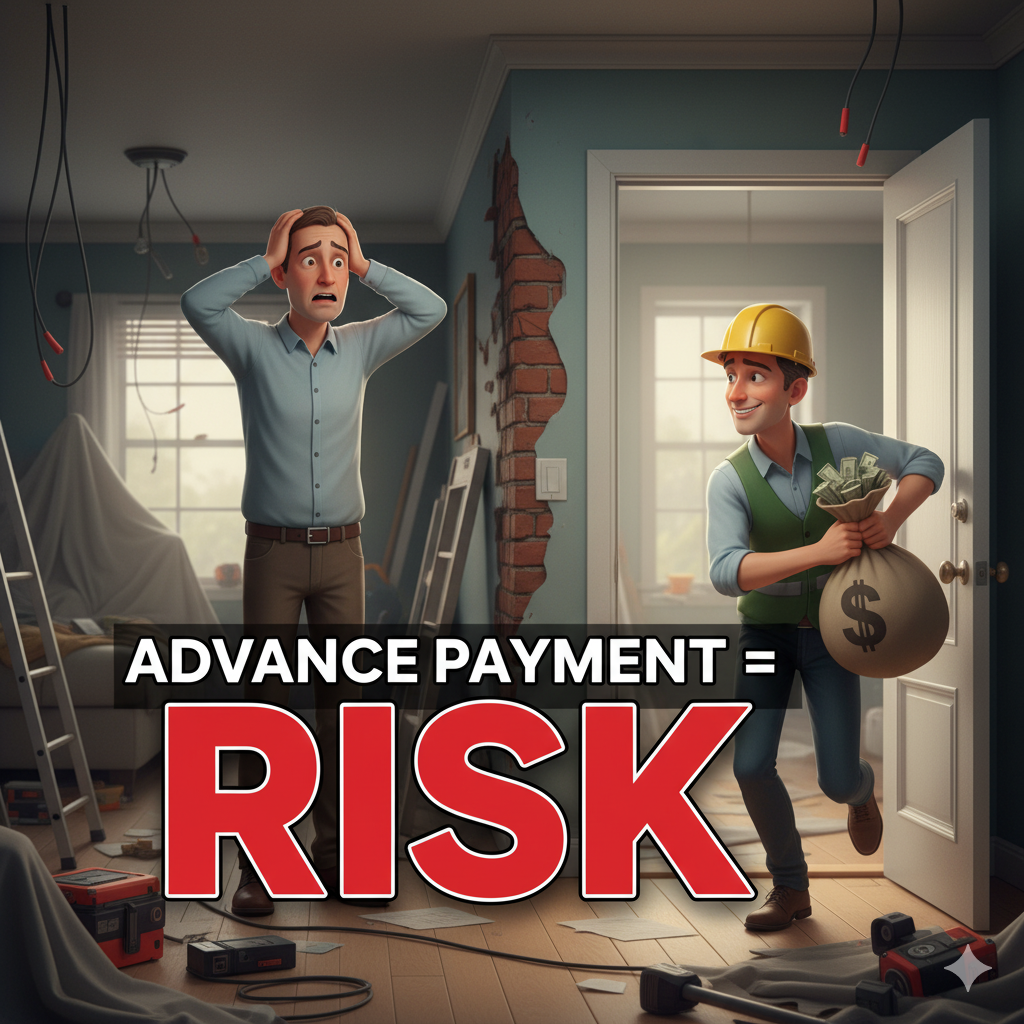
    They demand a large advance (50–80%) and then either disappear or stop work halfway.

  3. No Legal Agreement:
    They avoid signing proper contracts to escape responsibility later.

  4. Low Price Traps:
    They attract clients with very low quotations that are impossible to deliver with quality materials.

  5. Fake Company Identity:
    They use made-up company names, fake GST numbers, or false visiting cards to look professional.

  6. Poor-Quality Materials:
    They promise branded materials but use cheap substitutes once the work starts.


 How to Protect Yourself

  1. Verify Credentials:
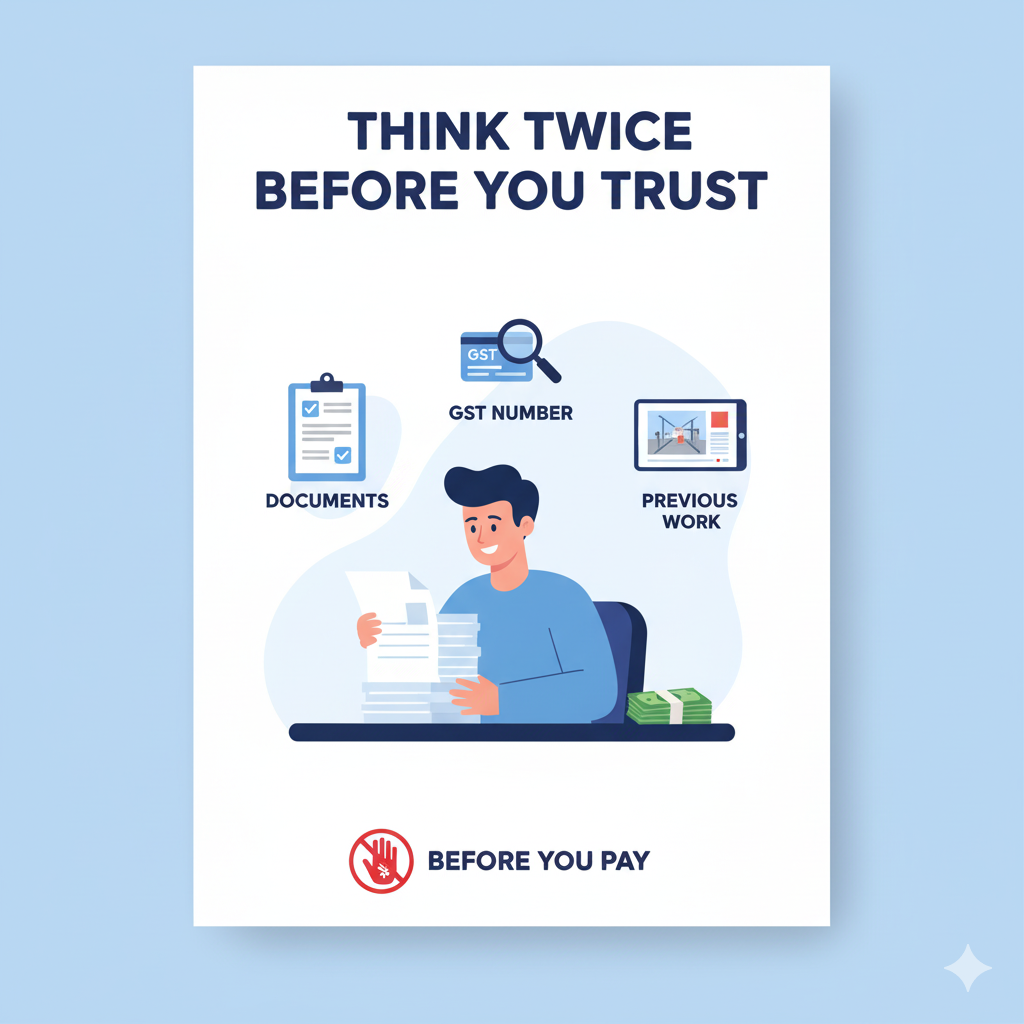
    Check the designer’s company registration, GST number, and previous client references.

  2. Ask for a Written Agreement:
    Always sign a detailed contract that mentions cost, materials, timeline, and warranty.

  3. Visit Completed Sites:
    Personally visit one or two completed projects before finalizing.

  4. Make Stage-Wise Payments:
    Never pay the full amount in advance — release payments only after each work stage is completed.

  5. Check Reviews & Social Media:
    Genuine designers usually have active profiles, testimonials, and consistent client feedback.

  6. Trust Reputed Studios:
    Work only with verified and experienced interior design studios or companies.

Why the Market Is So Competitive

  1. Rising Number of Designers:
    Every year, more new designers and studios enter the market, making it harder for genuine professionals to stand out.

  2. Price Wars:
    Many designers quote extremely low prices to attract clients, often compromising on material quality or finishing.

  3. Client Confusion:
    With so many options, clients get confused between price, quality, and trust — often choosing the cheapest, not the best.

  4. Social Media Pressure:
    Designers compete to look “perfect” online, sometimes spending more on marketing than on actual project quality.

  5. Lack of Standardization:
    There’s no fixed pricing structure or quality check, leading to unfair competition and unrealistic client expectations.


 Challenges Designers Face

  1. Balancing Quality and Cost:
    Clients want premium designs at minimum cost, forcing designers to make tough compromises.

  2. Maintaining Reputation:
    One bad project or delay can harm a studio’s image in a highly competitive field.

  3. Payment Delays:
    Many clients delay payments, creating cash flow problems for designers.

  4. Innovation Pressure:
    Every project needs to look “unique,” pushing designers to constantly reinvent their ideas.

  5. Copycat Designs:
    Unethical designers copy others’ concepts and offer them cheaper, reducing originality value in the market.


 How to Win in a Tough Market

  1. Build Trust, Not Just Quotes:
    Clients value honesty and communication more than flashy promises.

  2. Show Real Work:
    Focus on completed projects and client satisfaction — real proof beats fake marketing.

  3. Quality Over Quantity:
    Delivering fewer but better projects builds long-term success.

  4. Professional Contracts:
    Always use legal agreements to avoid misunderstandings or fraud.

  5. Stay Updated:
    Keep learning about new materials, technologies, and design trends.

Common Materials Where Frauds Occur

  1. Plywood & MDF Boards:
    Duplicate plywood with fake ISI stamps or brand stickers are sold at cheaper rates.
    They warp or break easily within months.

  2. Electrical Wires & Switches:
    Fake wires without proper copper content can overheat and cause fire hazards.

  3. Paints & Polish:
    Counterfeit paint brands look similar but fade quickly and give patchy finishes.

  4. Hardware & Hinges:
    Imitation branded hinges or channels lose strength and rust fast.

  5. Acoustic & Insulation Materials:
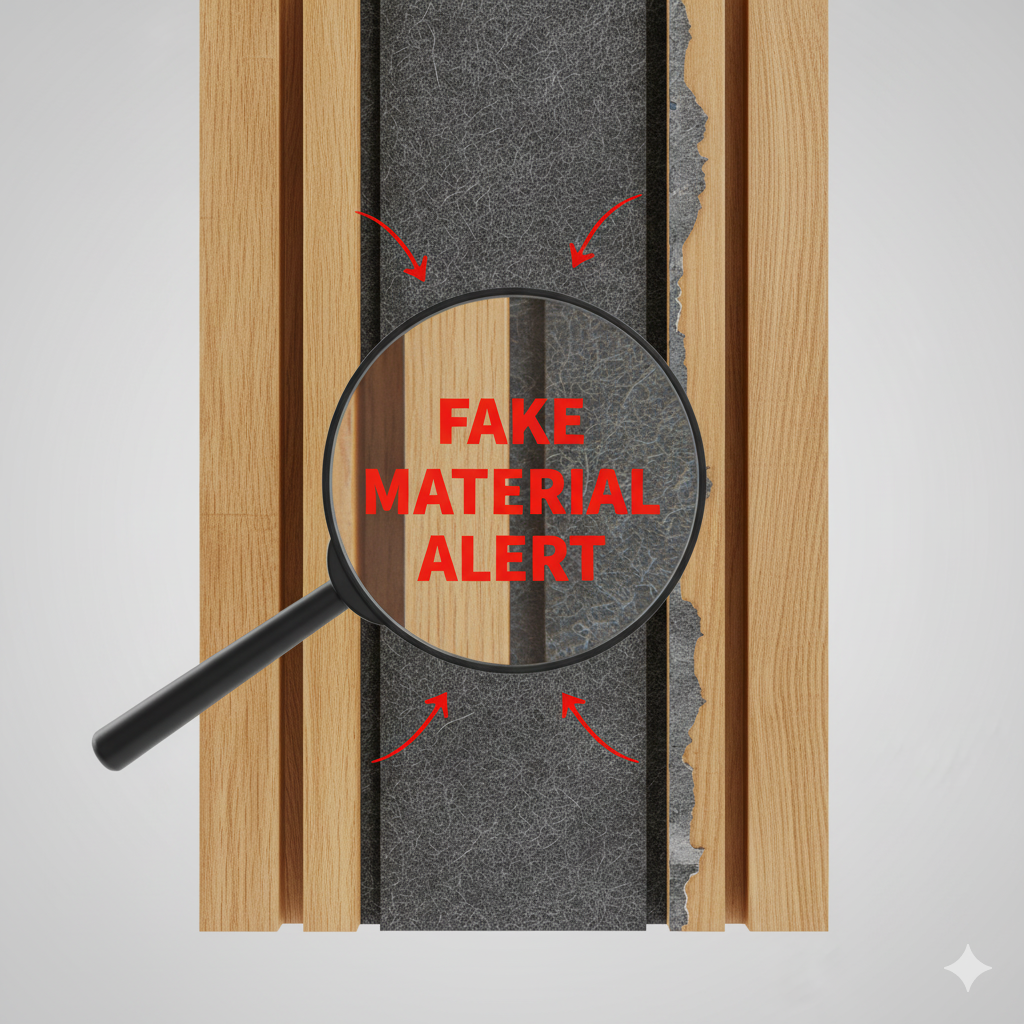
    Duplicate acoustic sheets, fiber panels, or MLV rolls do not provide actual soundproofing, even if packed like originals.

  6. Lighting Products:
    Fake LED panels or drivers consume more power and have a very short lifespan.

How Fraud Happens

  • Suppliers replace branded cartons with local material inside.

  • Old packaging is reused to sell duplicate products.

  • Contractor claims “same quality” as branded but provides cheap copies.

  • No purchase bill or serial number is provided to verify authenticity.


 How to Identify Genuine vs Duplicate

  1. Check Brand Hologram or QR Code:
    Most genuine brands now provide QR codes for verification.

  2. Ask for Purchase Bills:
    Always demand an official bill with GST number and product details.

  3. Inspect Packaging & Labels:
    Look for spelling mistakes, faded printing, or unusual colors on packaging.

  4. Verify with Manufacturer:
    Contact the brand’s customer care to confirm batch number or dealer name.

  5. Compare Weight and Texture:
    Fake materials often feel lighter, thinner, or different in finish.

  6. Buy Only from Authorized Dealers:
    Never buy “loose” material without brand packing or documentation.

Common Cash Fraud Situations

  1. Fake Contractor Scam:
    Someone claims to be an interior professional, shows fake designs or references, takes a big advance, and disappears.

  2. Material Supply Fraud:
    Supplier takes advance for ordering materials, but never delivers or sends duplicate items.

  3. Half Work, Full Payment:
    Contractor starts work, takes more money after a few days, and then stops work midway.

  4. No Receipts or Proof:
    Cash is taken without a proper bill, making it impossible to trace or take legal action later.

  5. Hidden Extra Charges:
    Fraudsters ask for “urgent” or “extra” advance for material booking that never happens.


 Why People Fall for It

  • Attractive low pricing or discounts.

  • Emotional or friendly talk to build quick trust.

  • Promises of “fast work” if payment is made immediately.

  • Lack of written contracts or formal process.


 How to Protect Yourself

  1. Never Pay Full Advance:
    Always split payments in stage-wise installments — after each phase of work.

  2. Use Digital Payments:
    Avoid cash. Use UPI, bank transfer, or cheque so that every payment has a record.

  3. Always Get a Receipt:
    Every payment, big or small, must have a signed receipt or invoice.

  4. Sign a Proper Agreement:
    Clearly mention payment terms, scope of work, and deadlines in writing.

  5. Verify Identity:
    Check the person’s company registration, ID proof, or GST number before paying.

  6. Don’t Rush:
    Scammers often pressure you to pay “today itself.” Take your time to verify before you trust.


Warning Signs of Fraud

  • Asking for more than 40–50% advance.

  • Avoiding written agreement.

  • Refusing to share company details.

  • Giving excuses after taking payment.

  • Suddenly changing phone numbers or office location
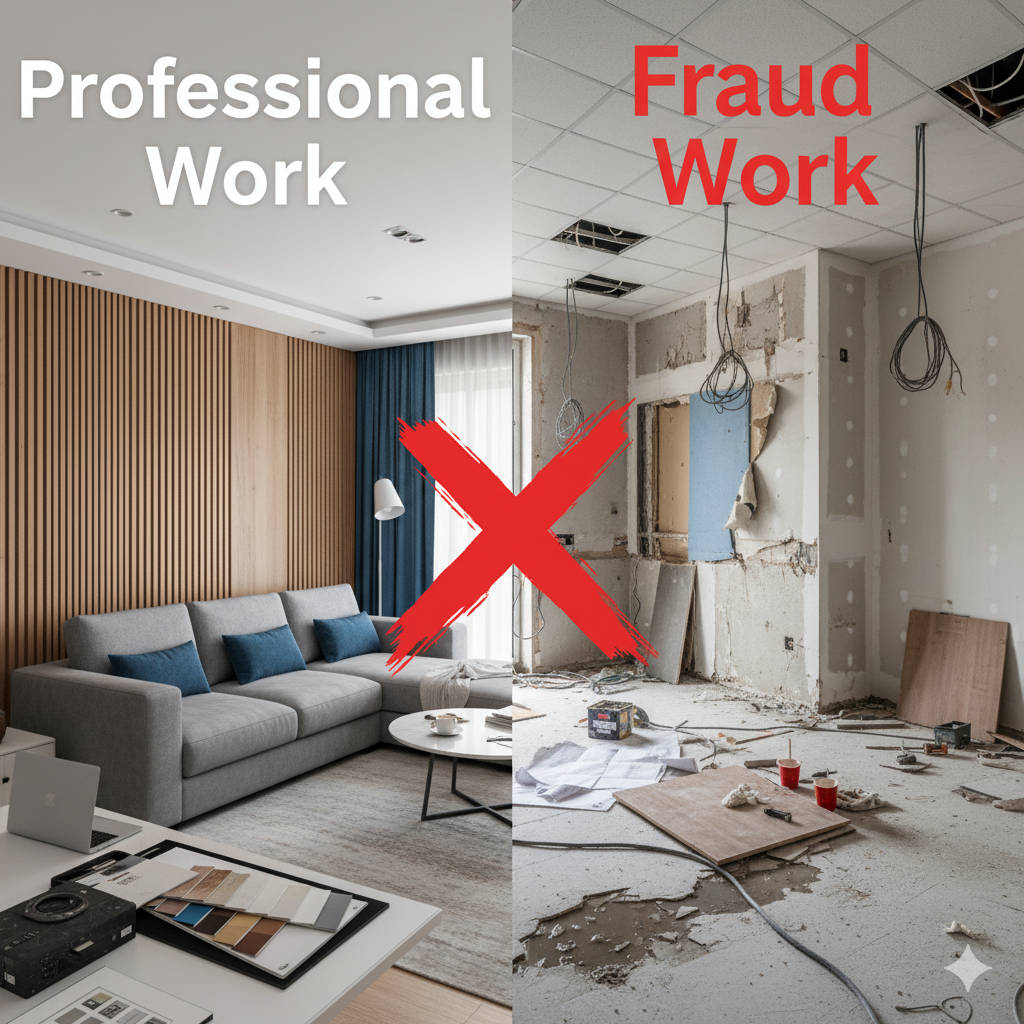
Differences Between Honest and Fraudulent Companies

FeatureHonest CompanyFraudulent Company
Work QualityUses proper materials, skilled labor, finishes work professionally.Uses cheap or duplicate materials, cuts corners, poor finishing.
TransparencyProvides detailed quotes, invoices, and project updates.Vague costing, hidden charges, avoids documentation.
Client InteractionCommunicates regularly, respects timelines.Disappears, delays work, makes excuses.
Materials UsedGenuine branded products with warranty.Fake or low-quality substitutes, often no warranty.
Contracts & LegalitiesSigns clear agreements with payment milestones.Avoids formal contracts; asks for full advance.
ReputationPositive reviews, past client references.Fake testimonials, copied portfolios.

🧩 Why Quality Speaks

  1. Long-term Trust:
    Quality work builds a lasting relationship between designer and client.

  2. Value for Money:
    Genuine companies deliver the promised results, making every rupee worth it.

  3. Safety & Durability:
    Proper materials and workmanship ensure structural safety and longevity.

  4. Peace of Mind:
    No constant worry about fraud, shortcuts, or fake promises.


Warning Signs of Fraud Companies

  • Overly cheap quotations that seem “too good to be true.”

  • Avoiding written contracts or invoices.

  • Using unclear or fake portfolios.

  • Pressuring for full cash advance.

  • Frequent changes in contact or office locations.


Tips to Choose Honest Companies

  1. Verify credentials, GST, and company registration.

  2. Ask for previous client references and visit completed projects.

  3. Use stage-wise payments linked to completed milestones.

  4. Check material authenticity through bills and brand codes.

  5. Read online reviews and feedback from reliable sources.

The interior design and construction industry is full of opportunities — but also risks for unsuspecting clients. Many homeowners fall victim to fraudulent designers, fake contractors, or duplicate materials because they trust too quickly without verification.

This campaign emphasizes the importance of careful evaluation, verification, and vigilance before hiring anyone.


 Common Risks for Clients

  1. Advance Payment Frauds:
    Paying large sums upfront to contractors who never deliver.

  2. Fake Material Use:
    Contractors claim to use branded products but install duplicates.

  3. Low-Cost Traps:
    Extremely cheap quotes often compromise quality and lead to extra hidden charges.

  4. Fake Portfolios:
    Some designers show copied work to impress clients but cannot deliver the same quality.

  5. Unregistered or Unverified Companies:
    Lack of legal credentials or GST registration can leave clients with no legal recourse.


 Tips for Safe Client Decisions

  1. Verify Credentials:
    Check company registration, GST number, and past project references.

  2. Request Written Contracts:
    Include work scope, material specifications, payment schedule, and timelines.

  3. Stage-Wise Payments:
    Never pay full amount upfront — pay only after verified completion of work stages.

  4. Inspect Materials:
    Confirm branded materials via bills, serial numbers, or QR verification.

  5. Visit Previous Projects:
    See real work done by the designer to evaluate quality.

  6. Check Reviews & Feedback:
    Online reviews, social media, and word-of-mouth can reveal credibility.


Message

“Trust is earned, not given. Think twice before you hire. Your dream home deserves honesty, transparency, and quality.”
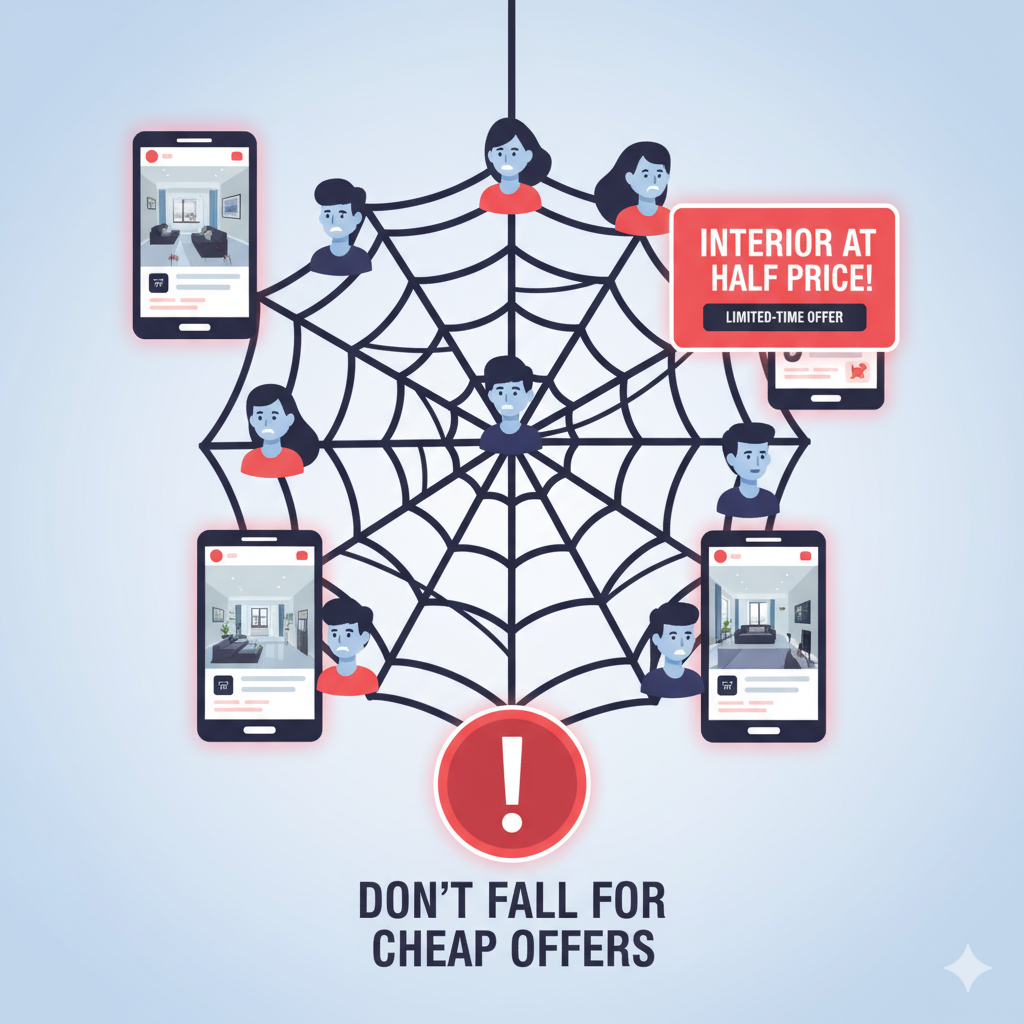
In today’s digital age, many interior design and construction clients find services online. While the internet makes hiring convenient, it also exposes clients to fake advertisements and fraudulent offers. Scammers lure clients with unrealistically low prices or flashy deals, only to cheat them later.

This awareness topic helps clients identify fake ads and avoid online scams.


 Common Tactics in Fake Online Ads

  1. Unrealistically Low Prices:
    Ads offering 50–70% discounts or “too good to be true” quotes.

  2. Fake Company Profiles:
    Scammers create professional-looking websites or social media accounts with fake testimonials.

  3. Copied Portfolio Images:
    Ads show impressive designs stolen from other websites or designers.

  4. Advance Payment Requests:
    Fraudsters demand full payment upfront before starting any work.

  5. No Contact Verification:
    Ads may not provide verifiable office addresses, phone numbers, or GST registration.


How to Protect Yourself

  1. Check the Company Credentials:
    Verify company registration, GST number, and past project references.

  2. Visit Real Projects:
    Don’t rely on images in ads — visit completed projects if possible.

  3. Stage-Wise Payments:
    Avoid paying full advance; pay only after verified completion of work milestones.

  4. Verify Contact Information:
    Ensure phone numbers, emails, and physical addresses are legitimate.

  5. Be Skeptical of “Too Cheap” Offers:
    Compare quotes with market rates; extremely low prices often indicate poor-quality work or scams.

  6. Check Reviews and Social Media:
    Search for genuine client reviews on Google, Facebook, or verified platforms.


Warning Signs

  • Ads promising “luxury interiors at half the market rate.”

  • No verified client testimonials or references.

  • Requesting full payment immediately.

  • Offers that create urgency (“limited time only”).


Message

“Cheap offers online can cost you dearly. Verify, inspect, and pay smartly.
Trust only verified designers — your home deserves honesty, not shortcuts.”

Exit mobile version