
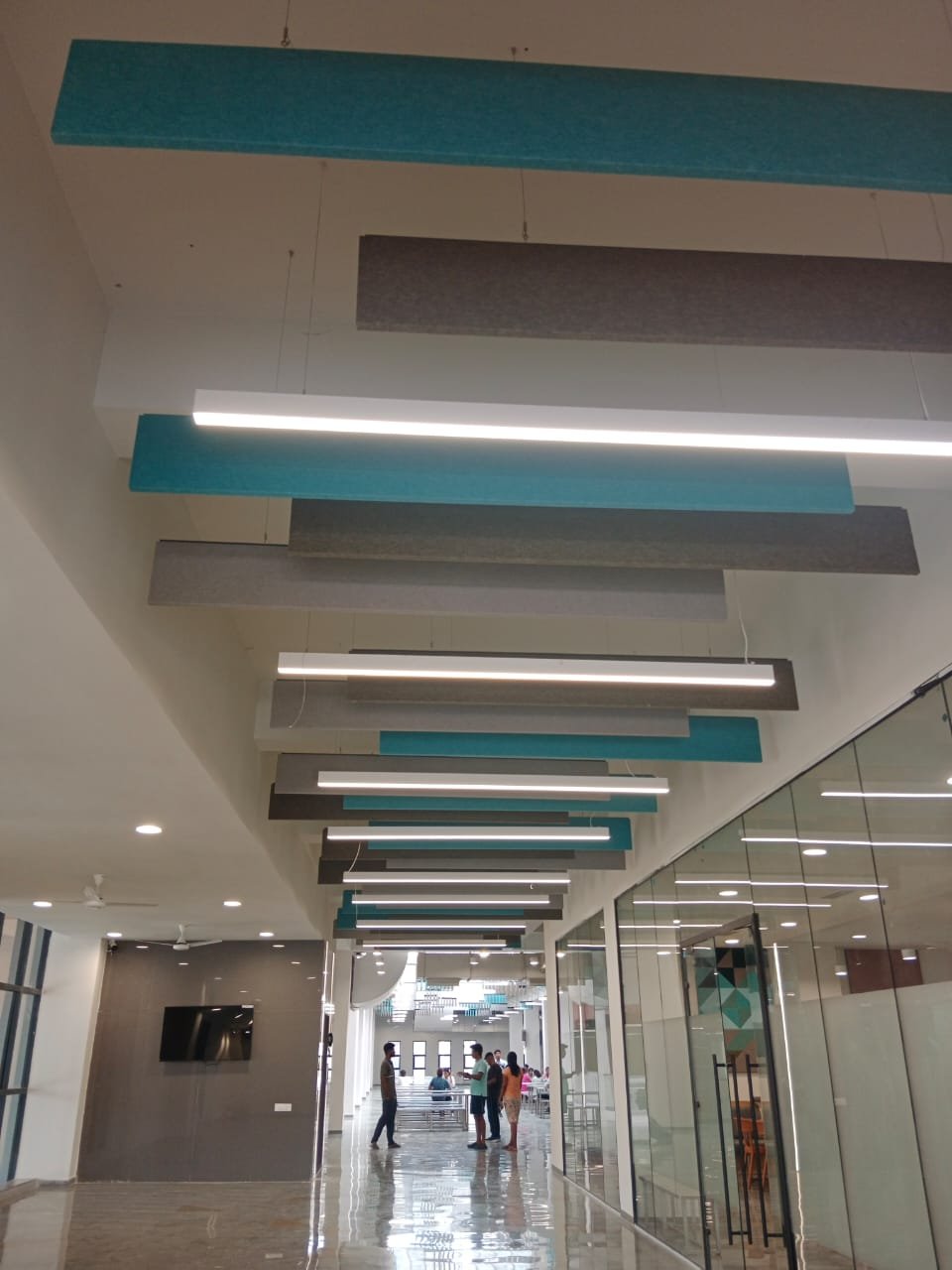
Polyester Fibre Sheet is a non-woven material made by compressing recycled polyester fibres (often from PET bottles) into dense, rigid, or semi-rigid panels. It is widely used for acoustic insulation, thermal insulation, decorative panels, and wall/ceiling linings.
What types of designs can you create?
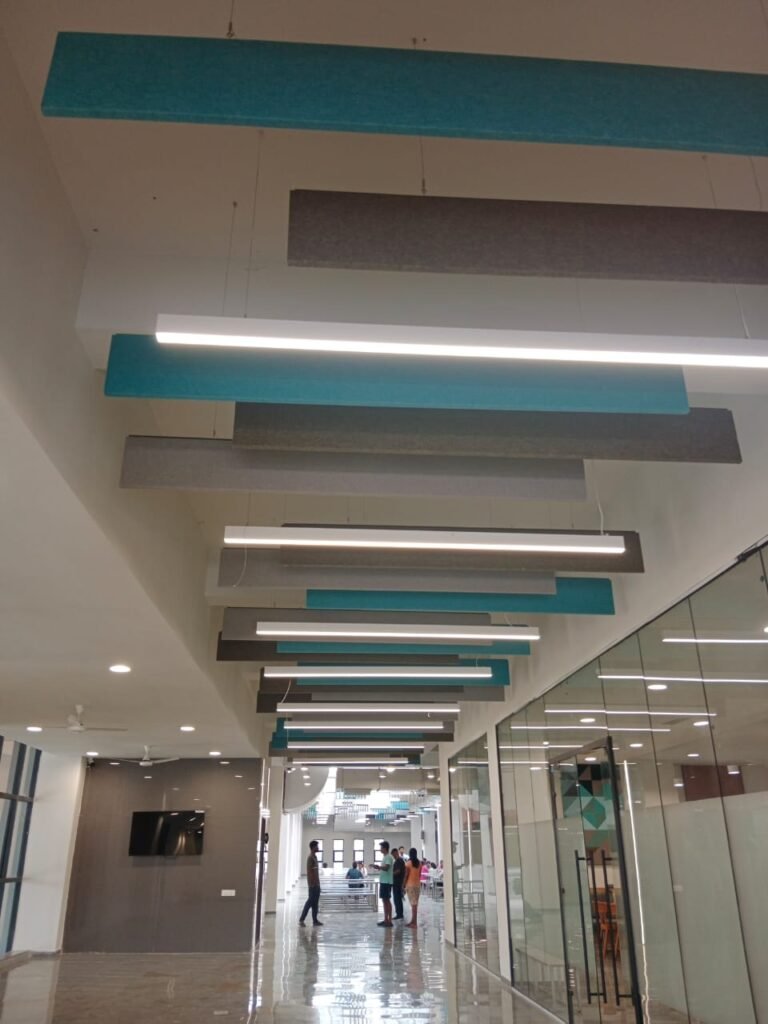
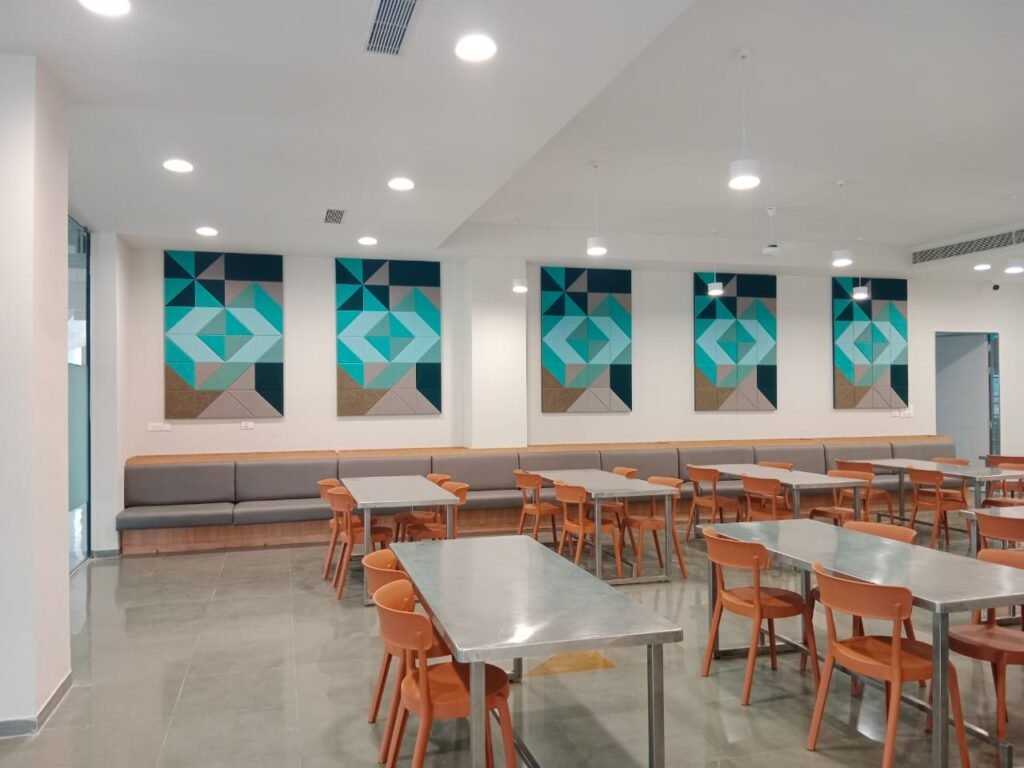
Technical Specifications
| Property | Details |
| Material | 100% Recycled Polyester Fiber (PET) |
| Density | 120 – 220 kg/m³ (customizable) |
| Thickness | 6mm, 9mm, 12mm, 24mm (most common: 9mm/12mm) |
| Sheet Size | 1220 mm x 2440 mm (4ft x 8ft) |
| Weight | 1.8 – 4.5 kg/sheet (depending on thickness) |
| NRC Rating | 0.35 – 0.90 (depending on design/placement) |
| Fire Rating | B1 or B2 Class (as per standards like ASTM) |
| Thermal Conductivity | Approx. 0.034 – 0.040 W/m·K |
| Tensile Strength | Good; durable for handling and mounting |
| Color Options | Wide range (grey, black, red, blue, beige, etc.) |
| Eco-Friendly | Yes – Made from recycled materials |
Applications
-
Acoustic Treatment:
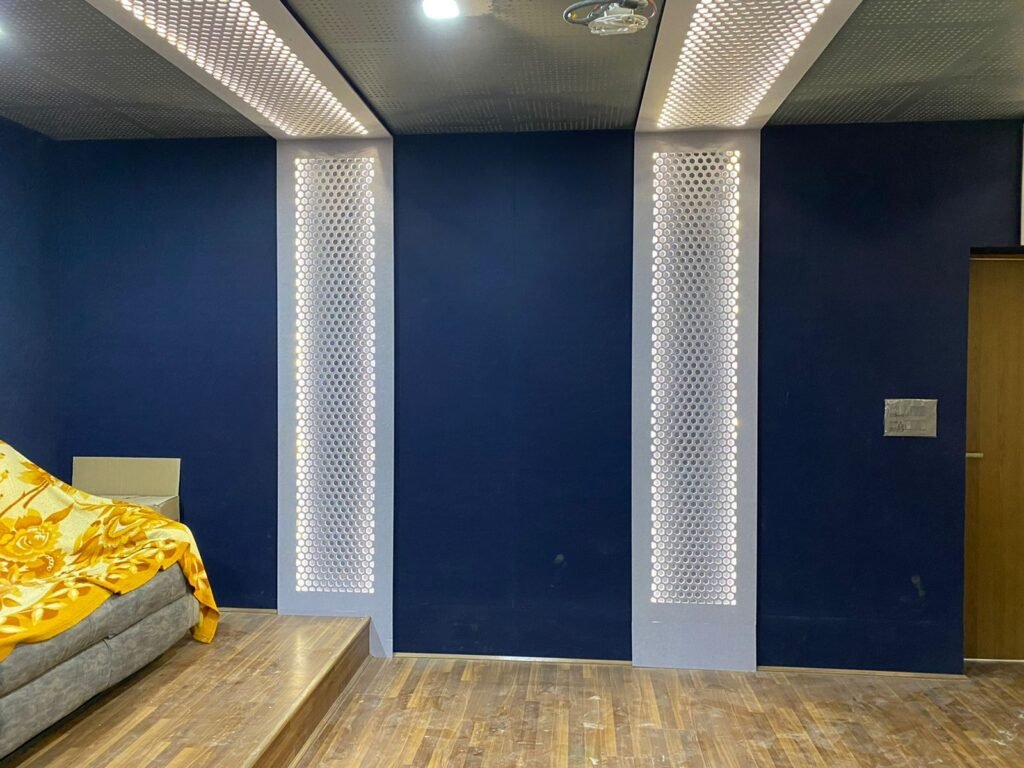
- Walls & ceiling panels in theaters, offices, schools, etc.
- Reduces echo & improves sound clarity.
-
Interior Decoration
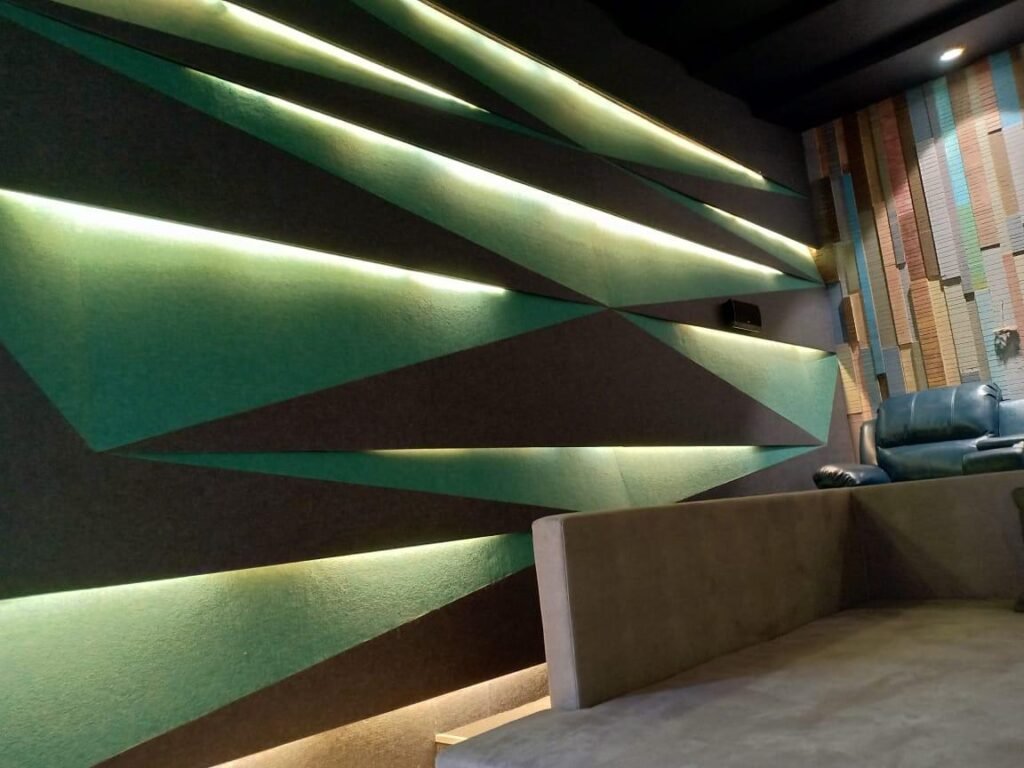
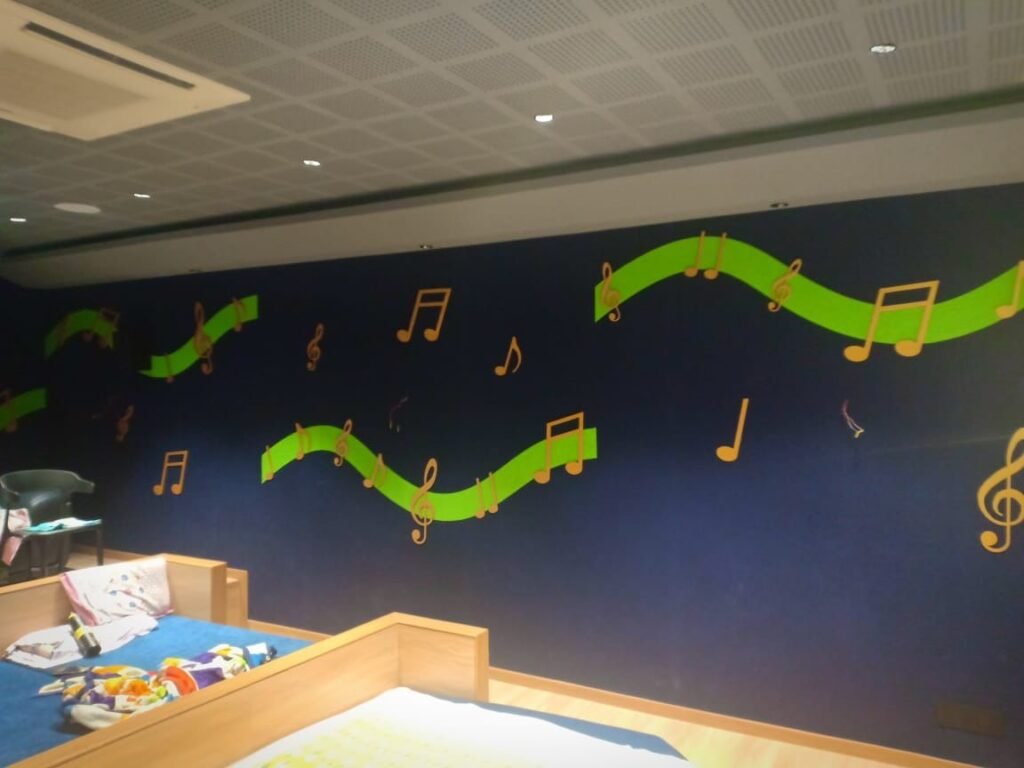
- Colored & shaped panels for stylish looks.
- Used behind TVs, desks, or wall designs.
-
Thermal Insulation
- Adds a moderate insulation barrier in partitions or ceilings.
-
Industrial Use
- Machinery enclosures, studio walls, acoustic booths.
Installation Methods
- Direct pasting using adhesives (like Fevicol SH or PU-based glue)
- Hook & loop (Velcro)
- Mechanical fasteners or frame-based mountings
- Can be cut with a knife or laser for CNC shapes
Advantages
-
🔇 Excellent sound absorption
-
🛠️ Lightweight and easy to install
-
🌱 Eco-friendly (recycled)
-
🔥 Fire retardant
-
💧 Moisture-resistant
-
🌈 Aesthetic & color customizable
-
🧼 Easy to clean (dry cloth or vacuum)
Test Certifications (check with supplier)
- NRC Report (Acoustic test)
- Fire Retardancy certificate
- Density and strength test report
- Formaldehyde Emission – Low/Zero
Best Use Cases
-
Home Theaters
-
Studios (Podcast, Music, Voice Over)
-
Corporate Conference Rooms
-
Classrooms, Auditoriums
-
Restaurants and Cafés
-
Noise-sensitive office cabins
Important Test Reports & Certificates for Polyester Fiber Sheet
1. NRC Report (Noise Reduction Coefficient) – Acoustic Performance
- What is it?
The Noise Reduction Coefficient (NRC) is a rating that shows how much sound a material absorbs. Values range from 0 (no absorption) to 1 (full absorption). - Standard Testing Method:
- ASTM C423 (Standard Test Method for Sound Absorption and Sound Absorption Coefficients by the Reverberation Room Method)
- ISO 354
- Typical Values for Polyester Fiber Panels:
- 6mm sheet: NRC ~ 0.30
- 9mm sheet: NRC ~ 0.50–0.65
- 12mm sheet with air gap: NRC ~ 0.75–0.90
- Why it matters:
Higher NRC helps reduce echo and reverberation in a room, making it ideal for theaters, offices, and studios. - Ensure Supplier Provides:
- Test lab certificate (e.g., from ARAI, NABL lab, or Intertek)
- Testing based on ASTM C423 or ISO 354
2. Fire Retardancy Certificate
- What is it?
Verifies that the sheet is fire-resistant or self-extinguishing. Important for safety compliance in public buildings. - Standard Testing Methods:
- ASTM E84 (USA) – Surface Burning Characteristics
- EN 13501-1 (Europe) – B-s1, d0 is common class
- IS 15061 or IS 11871 (India)
- Fire Rating Classes:
- Class B1: Flame-retardant
- Class B2: Normal flammability
- Class A: Non-combustible (rare for fiber panels)
- ✅ Ensure Supplier Provides:
- Certified test report from a government-approved lab (like SGS, Intertek, ARAI)
- Specifies flammability rating, smoke emission, and burning time
3. Density and Strength Test Report
- What is it?
Shows the material’s compressive strength, tensile strength, and overall density (kg/m³), which affects acoustic and durability properties. - Typical Values:
- Density: 120–220 kg/m³
- Tensile Strength: Moderate (non-tearable in normal handling)
- Compression Strength: Withstands mild load pressure without deformation
- Standard Testing Methods:
- ISO 845 for Density
- ISO 1798 / ASTM D3574 for Tensile Strength
- IS 2380 or ISO 3386 for Compression
- ✅ Ensure Supplier Provides:
- Density report
- Strength test certificate from NABL-accredited lab
- Product data sheet with declared mechanical properties
4. Formaldehyde Emission Test – Low/Zero VOC
- What is it?
Measures Volatile Organic Compounds (VOC) and formaldehyde emissions from the sheet. Necessary for health and green building compliance (LEED/GREEN PRO certified projects). - Testing Standard:
- EN 717-1 (Formaldehyde Release – Europe)
- ASTM D5116 (USA)
- JIS A 1460 (Japan)
- Safe Emission Values:
- E1 Class: ≤ 0.124 mg/m³ (low-emission)
- E0 Class: ~ 0.05 mg/m³ (nearly zero)
- Some sheets are formaldehyde-free
- ✅ Ensure Supplier Provides:
- VOC/Formaldehyde test report from SGS/Intertek/NABL lab
- Declare “E1/E0 certified” or “Zero VOC” on packaging or brochure
📄 How to Get These Reports?
You should request these directly from your manufacturer or distributor. Use this checklist:
- 🔲 NRC Lab Certificate (ASTM C423 or ISO 354)
- 🔲 Fire Rating Certificate (ASTM E84, EN 13501-1)
- 🔲 Density & Strength Data Sheet (ISO 845, ISO 1798)
- 🔲 VOC/Formaldehyde Certificate (EN 717-1 or ASTM D5116)
If you are interested in this work, please contact us at this ecotone acoustic in India any location Design and execution will be provided. If you find these details useful, please like and comment.