Perhaps today’s young generation isn’t even aware of who introduced hockey to India.
Why is this game considered an international sport in India?
Egypt (4000 years ago):
When wall paintings were observed inside pyramids, there were depictions of people playing with bent wooden sticks and round ball-like objects.
Similar games were later found in Persia, Greece, and China.
Then came the British.
In the 1800s, the British developed and formalized the game of hockey.
In 1885–86, the game was introduced to India, and in the beginning, it was played only by British soldiers, officers, and their families. Indians had very few opportunities to participate.
Gradually, Indian students – especially from colleges in Kolkata, Mumbai, and Lahore – began learning the game.
-
- In 1885, after the establishment of the Calcutta Hockey Club, friendly matches between British clubs and Indian teams began.
-
- Initially, the British had advantages in physical fitness, organization, and turf experience, so Indian teams often lost.
-
- However, the speed, ball control, and stick work of Indian players amazed the British.
Turning point in the 1920s:
-
- After World War I, Indian teams became stronger.
-
- In 1922–23, the Indian hockey team toured England and defeated many British clubs.
Eventually, the British acknowledged that Indian players could compete at the international level.
- In 1922–23, the Indian hockey team toured England and defeated many British clubs.
-
- In the 1928 Amsterdam Olympics, England wasn’t present, but India earned worldwide recognition by winning gold.
-
- In the 1948 London Olympics – independent India’s first Olympic appearance – the final match was India vs. England.
-
- India won 4-0, defeating England and clinching gold.
This victory was not just in sports, but politically symbolic – as India defeated its former rulers on their own soil.
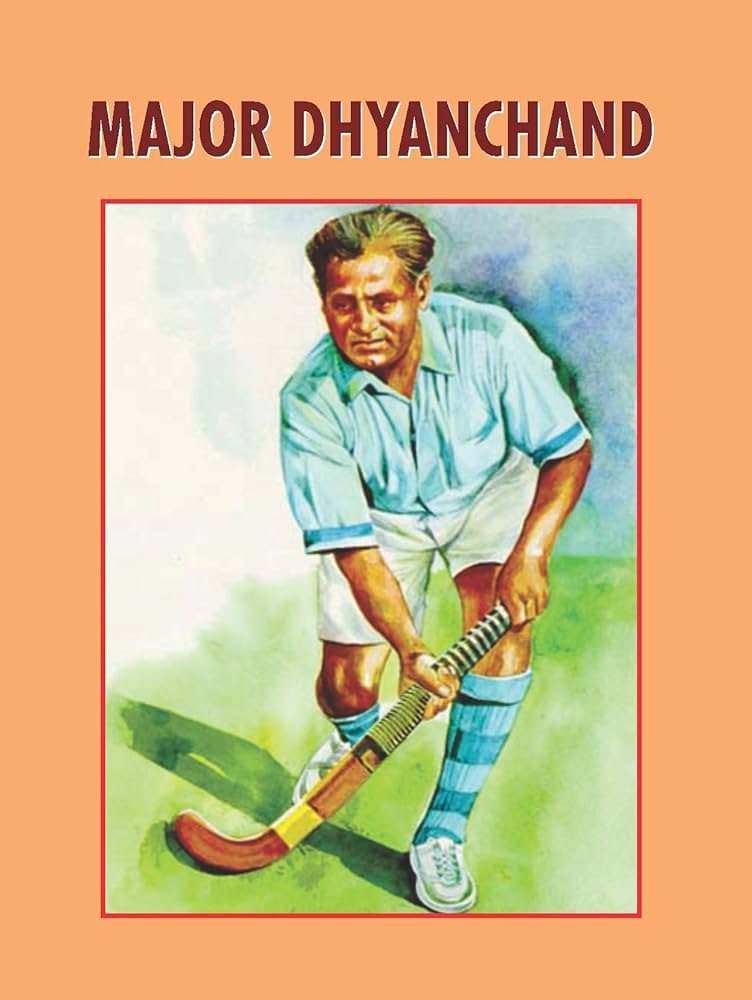
When talking about hockey, Major Dhyan Chand must be mentioned.
His magical control over the hockey stick left the world in awe.
There are even stories that German dictator Hitler offered Dhyan Chand to play for Germany after watching him play.
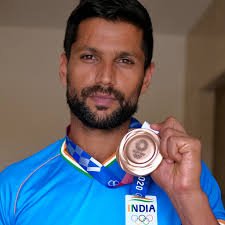
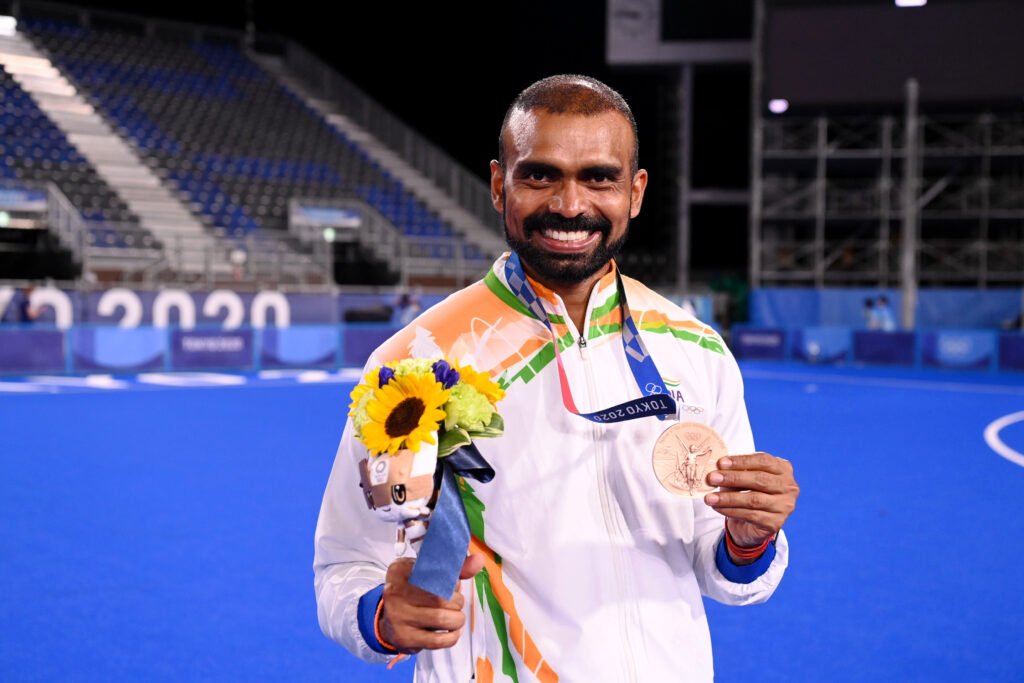
A moment of joy returned for India in 2021, when India won a bronze medal at the Tokyo Olympics.
-
- The Odisha government gave continuous support to Indian hockey.
-
- In schools and among the youth, hockey began to inspire again.
-
- The Women’s Hockey Team also performed brilliantly at the Olympics.
 Origin of the word “Hockey”:
The word “hockey” likely originates from the Old French word “hoquet,” which means “curved stick.”
But what happened next?
After 1980, India’s hockey performance started declining.
The popularity of cricket and other sports grew, while hockey began to fade.
Yet…
Hockey is not just a game for India – it’s a symbol of pride, honor, and skill.
The 1948 London Olympic victory remains one of the most golden moments in Indian sports history.